
If you’ve spent any time online, you’ve probably seen someone get called a “simp” in a comment section, a group chat, or a TikTok caption. It’s one of those internet slang words that spreads fast but rarely comes with a clear explanation.
This guide breaks down the simping meaning in plain English, where the word came from, how people use it in real conversations, and what it translates to in Hindi, Tamil, Telugu, Malayalam, Marathi, and Punjabi. By the end, you’ll know exactly what someone means the next time they call you or your friend a simp.
What Does “Simping” Mean?
Simping means acting with excessive, one-sided devotion toward someone you’re attracted to, usually without getting the same attention back. It’s the verb form of “simp,” and it describes behavior like constant texting, over-the-top compliments, or going out of your way to please a crush who barely notices.
The word carries a slightly teasing, sometimes critical tone. It’s rarely a compliment, but it isn’t always a harsh insult either. A lot depends on who’s saying it and why.
Simping Meaning Slang
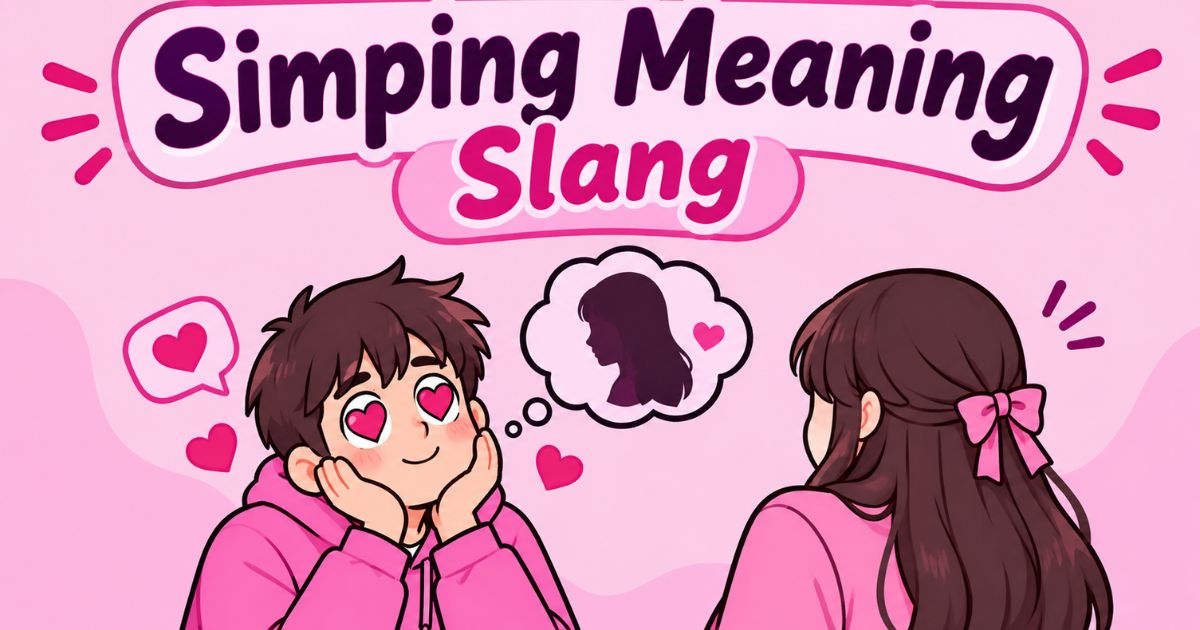
In slang usage, simping describes someone (most often a guy, though not exclusively) who showers a person they like with attention, gifts, or flattery, hoping it will eventually be reciprocated. Friends often use it jokingly when someone starts acting differently around their crush.
Simping Meaning in Chat
In chat and comment sections, “you’re simping” usually pops up when someone reacts a little too eagerly to a post, photo, or message from someone they’re interested in. It can be lighthearted teasing among friends or a pointed jab in a public comment thread.
Simping Meaning in Chinese
There isn’t one single official Chinese slang equivalent, but the closest translations used online are 舔狗 (tiǎn gǒu), which literally means “licking dog,” and describes someone excessively devoted to a person who doesn’t reciprocate. It carries a similar mocking tone to “simp” in English.
Simping Meaning in English (Simple Definition)
In simple English, to simp means to try too hard to impress or please someone you’re romantically or sexually interested in, especially when that effort isn’t returned. A “simp” is the noun form the person doing the simping.
Here’s a quick, snippet-friendly definition:
Simp (verb): To show excessive, unreciprocated attention, affection, or effort toward someone you like. Simp (noun): A person who does this regularly.
Where Did “Simping” Come From? (Origin)
The word has a longer history than most people realize.
- Early 1900s: “Simp” started as a shortened form of “simpleton,” meaning a foolish or gullible person.
- 1980s–1990s: Hip-hop culture picked up the term, using it as a playful insult for men seen as too soft or overly affectionate toward women.
- 2000s–2010s: The word spread online through forums and early YouTube comment culture.
- 2019 onward: “Simp” exploded on TikTok, Twitter, and gaming platforms like Twitch, where fans were mocked for overly generous donations or comments to streamers they admired.
Today, the word has drifted from a niche hip-hop insult to mainstream internet vocabulary used across almost every social platform.
Simping Meaning in Hindi
हिंदी में, “simping” का मतलब है किसी व्यक्ति के प्रति ज़रूरत से ज़्यादा प्यार, ध्यान या खुशामद दिखाना, खासकर तब जब सामने वाला उतना महत्व न दे। इसे आम बोलचाल में “किसी के पीछे बहुत ज़्यादा पड़ जाना” भी कहा जा सकता है।
Simping Meaning in Tamil
தமிழில், “simping” என்பது ஒருவர் மீது தேவைக்கு அதிகமான அன்பையும், கவனத்தையும் காட்டுவதைக் குறிக்கிறது, குறிப்பாக அந்த நபர் அதே அளவு பதிலளிக்காதபோது. இதை “அதிகமாக மயங்கிப் போவது” என்றும் சொல்லலாம்.
Simping Meaning in Telugu
తెలుగులో, “simping” అంటే ఎవరిపైనైనా అవసరానికి మించి ప్రేమను, శ్రద్ధను చూపించడం, ముఖ్యంగా ఆ వ్యక్తి అదే స్థాయిలో స్పందించనప్పుడు. దీన్ని “మితిమీరిన ఆకర్షణ” అని కూడా అర్థం చేసుకోవచ్చు.
Simping Meaning in Malayalam
മലയാളത്തിൽ, “simping” എന്നാൽ ഒരാളോട് ആവശ്യത്തിലധികം സ്നേഹവും ശ്രദ്ധയും കാണിക്കുന്നതാണ്, പ്രത്യേകിച്ച് അയാൾ അതേ അളവിൽ തിരിച്ചു നൽകാത്തപ്പോൾ. ഇത് “അമിതമായ ആരാധന” എന്നും വിശേഷിപ്പിക്കാം.
Simping Meaning in Marathi
मराठीत, “simping” म्हणजे एखाद्या व्यक्तीबद्दल गरजेपेक्षा जास्त प्रेम, लक्ष किंवा आपुलकी दाखवणे, विशेषतः जेव्हा समोरची व्यक्ती तितकाच प्रतिसाद देत नाही. याला “अति आकर्षण” असेही म्हणता येईल.
Simping Meaning in Punjabi
ਪੰਜਾਬੀ ਵਿੱਚ, “simping” ਦਾ ਮਤਲਬ ਹੈ ਕਿਸੇ ਵਿਅਕਤੀ ਪ੍ਰਤੀ ਲੋੜ ਤੋਂ ਵੱਧ ਪਿਆਰ, ਧਿਆਨ ਜਾਂ ਖੁਸ਼ਾਮਦ ਦਿਖਾਉਣਾ, ਖਾਸ ਕਰਕੇ ਜਦੋਂ ਸਾਹਮਣੇ ਵਾਲਾ ਓਨਾ ਹੀ ਜਵਾਬ ਨਹੀਂ ਦਿੰਦਾ। ਇਸਨੂੰ “ਬਹੁਤ ਜ਼ਿਆਦਾ ਪਿੱਛੇ ਪੈਣਾ” ਵੀ ਕਿਹਾ ਜਾ ਸਕਦਾ ਹੈ।
Simping Meaning in a Relationship
Inside an actual relationship, simping usually refers to one partner giving far more effort, attention, or emotional energy than the other. It’s different from being a caring partner simping implies an imbalance, where one person keeps giving without getting much back, often out of fear of losing the other person.
Healthy effort in a relationship is mutual. Simping, by contrast, is one-sided and can chip away at self-respect over time.
It often shows up gradually when one partner starts making all the plans, apologizing first even when they’ve done nothing wrong, or constantly seeking reassurance that they’re still wanted.
Over weeks or months, this pattern can leave someone feeling more like an admirer than an equal partner, which is why friends and family often step in to point it out before it goes too far.
Why Do People Simp? (The Psychology Behind It)

Simping doesn’t come out of nowhere; it usually has a psychological root. Understanding why people fall into this pattern can make it easier to recognize in yourself or someone close to you.
- Fear of rejection: Overcompensating with gifts, compliments, or constant availability can feel safer than risking outright rejection.
- Low self-esteem: Some people believe they need to “earn” affection through effort rather than trusting that they’re likable as they are.
- Idealization: Early-stage crushes often come with a rush of dopamine that makes the other person seem more perfect than they really are, fueling over-the-top gestures.
- Social media pressure: Public likes, comments, and streaks create a feedback loop where more attention feels like more validation, encouraging people to keep pushing for a reaction.
- Fear of missing out: Watching others get praised for grand romantic gestures online can pressure people into copying that behavior, even when it isn’t genuine to them.
None of these reasons make simping a character flaw. Most people simp at least a little at some point, especially during the early, nervous stages of liking someone. The behavior only becomes a real problem when it turns into a pattern that ignores how the other person is actually responding.
Simping Over Someone Meaning
To say someone is “simping over” a person means they’re completely fixated on them constantly thinking about them, talking about them, or trying to get their attention. It’s often used when someone develops a sudden, intense crush and starts acting noticeably different because of it.
Example: “He’s been simping over the new girl in class all week.”
Simping Hard Meaning
“Simping hard” is just an intensified version of simping. It means someone isn’t just showing a little extra attention they’re going all in, often to an obvious or slightly embarrassing degree.
Example: “Bro liked every single one of her old photos. He’s simping hard.”
Stop Simping Meaning
“Stop simping” is usually friendly advice or teasing, telling someone to stop putting so much effort into a person who isn’t reciprocating. It’s often said to encourage someone to protect their self-respect and stop chasing one-sided attention.
Also Read This : What Does TOS Mean?
Simping Behavior What Does It Look Like?
Simping behavior can show up in small, everyday actions. Here are the most common signs:
| Behavior | What It Looks Like |
| Constant messaging | Texting first every time, even after being left on read |
| Excessive compliments | Complimenting every post, photo, or comment |
| Financial generosity | Spending money on gifts or donations to impress someone |
| Dropping plans | Canceling other commitments whenever the person reaches out |
| Overlooking red flags | Ignoring disrespect to keep the person’s attention |
| Public flattery | Defending or praising the person publicly, even unprompted |
Examples of Simping in Real Life

- Liking and commenting on every single Instagram post from a crush within seconds of it going up.
- Buying expensive gifts for someone who has shown little to no romantic interest.
- Donating large sums to a streamer just to get a shoutout or a moment of attention.
- Constantly agreeing with someone’s opinions just to stay in their good graces.
- Rearranging your entire schedule around one person’s availability.
Simping vs Other Slang Words
Simp isn’t the only slang term for this kind of behavior. Here’s how it compares to similar words:
| Term | Meaning | How It Differs From Simp |
| Whipped | Controlled by a partner, often in an established relationship | Usually implies an existing relationship, not a one-sided crush |
| Reply Guy | Someone who repeatedly comments on a specific person’s posts | Focused on online comment behavior, not gifts or real-life effort |
| White Knight | Someone who defends a person publicly, often unnecessarily | Centers on “rescuing” or defending, not just seeking affection |
| Softboi | A man who performs sensitivity to attract women | About image and personality, not direct one-sided devotion |
| Simp | Excessive, unreciprocated devotion toward a crush | Broadest and most commonly used term today |
How to Use “Simping” Correctly
- Use it casually among friends as light teasing, not a serious insult.
- Pair it with “for” or “over” as in “simping for her” or “simping over him.”
- Avoid using it to shame someone for being kind, respectful, or emotionally open. That’s not simping, that’s healthy behavior.
- Remember it’s informal slang, so it doesn’t belong in formal writing or professional conversations.
Final Summary
Simping means putting excessive, one-sided effort into someone you’re attracted to, often without getting the same energy back. The word started as slang for “simpleton” decades ago, moved through hip-hop culture, and exploded across social media around 2019.
Today it’s used everywhere from group chats to comment sections, usually in a playful way, though it can sting when used unkindly.
The key takeaway: being thoughtful, respectful, or affectionate toward someone isn’t simping. Losing your sense of self while chasing someone who isn’t reciprocating that’s when the label fits.