
If you’ve spent any time on TikTok, Instagram, or in a group chat with friends from the Middle East, you’ve probably seen the word “habibi” pop up everywhere. Someone drops it in a comment, a friend texts it after you send a funny meme, or a stranger online calls you “habibi ” out of nowhere and you’re left wondering what it actually means.
In 2026, habibi became one of the most-used Arabic words in global texting culture. It shows up in DMs, comment sections, K-pop fan pages, gaming chats, and even corporate Slack messages between friends. But its meaning isn’t always as simple as a dictionary definition suggests.
This guide breaks down exactly what habibi means, how it’s used in real conversations, whether it’s flirty or just friendly, and how you should respond when someone sends it to you.
What Does “Habibi Meaning” Mean in Text?
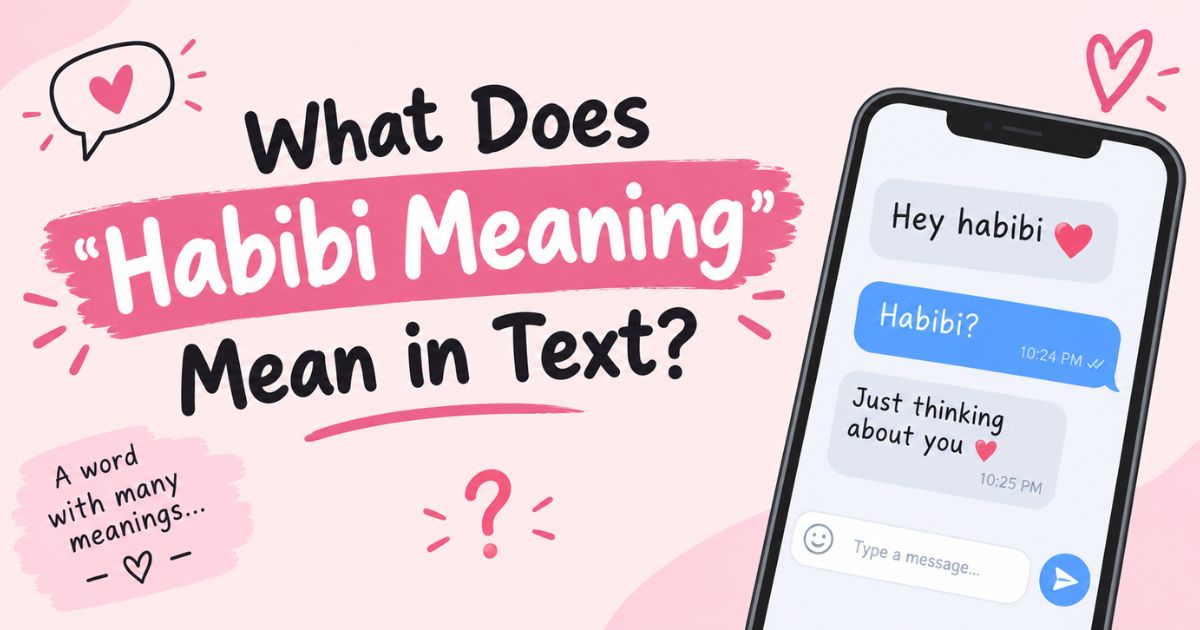
In texting, habibi is an Arabic term of endearment that roughly translates to “my love,” “my dear,” or “my darling.” It comes from the Arabic root word hubb (حب), meaning “love.”
But here’s the part most guides skip: in text messages, habibi rarely carries the heavy, romantic weight the literal translation suggests. It’s more of a warm, casual filler word similar to how English speakers say “buddy,” “dude,” “babe,” or “hun” without meaning anything deeply serious about it.
So when someone texts you “habibi,” they’re usually expressing:
- Friendliness or closeness
- Casual affection
- Playful warmth
- Sometimes, genuine romantic interest
The exact meaning depends heavily on who’s saying it, the tone of the conversation, and the emoji or punctuation attached to it.
Habibi Meaning in English
The closest English translations of habibi are:
- My love
- My dear
- My darling
- Beloved
In everyday English conversation, though, people often use it more like “bro,” “friend,” or “buddy”especially in group chats or casual banter between people who aren’t romantically involved at all.
Habibi Meaning Slang
As internet slang, habibi has drifted from its formal Arabic meaning into something looser and more universal. Online, it’s used as:
- A friendly greeting (“Hey habibi, what’s up?”)
- A term of appreciation (“Thanks habibi!”)
- A playful tease among friends
- A meme-worthy catchphrase, thanks to viral sounds and reaction videos
Because of its rise on social media, habibi slang usage now often has nothing to do with Arabic culture at all; it simply became a trendy, affectionate word people borrow because it sounds smooth and expressive.
Habibi Meaning to a Boy
When habibi is used toward a boy or man, it’s the standard masculine form and needs no change. It can mean:
- “My friend” or “bro” (platonic use between male friends)
- “My love” or “babe” (romantic use from a partner)
- “Sweetie” (used by a parent, relative, or older person)
Context and relationship decide the tone the word itself stays the same.
Habibi Meaning to a Girl
Technically, the correct feminine form is “habibti” (my beloved, feminine), not habibi. However, in casual texting and online slang, many people use “habibi” for everyone regardless of gender, simply because it’s become the more widely recognized version internationally.
If someone wants to be linguistically precise, using habibti for a girl shows a bit more cultural accuracy but plenty of native speakers use habibi interchangeably in informal chats.
The Most Common Meanings of “Habibi”
Here’s a quick breakdown of how the word shifts depending on context:
| Context | Likely Meaning | Tone |
| Between close friends | “Bro” / “buddy” / “dude” | Friendly, casual |
| From a parent to a child | “Sweetie” / “honey” | Warm, caring |
| Between romantic partners | “My love” / “babe” | Romantic, affectionate |
| From a stranger online | Friendly greeting or flirtation | Depends on tone |
| In memes/TikTok trends | Playful catchphrase | Humorous |
The same three syllables can mean five different things, which is exactly why so many people search for clarity on what habibi actually means when they receive it.
Where Does “Habibi” Actually Come From?
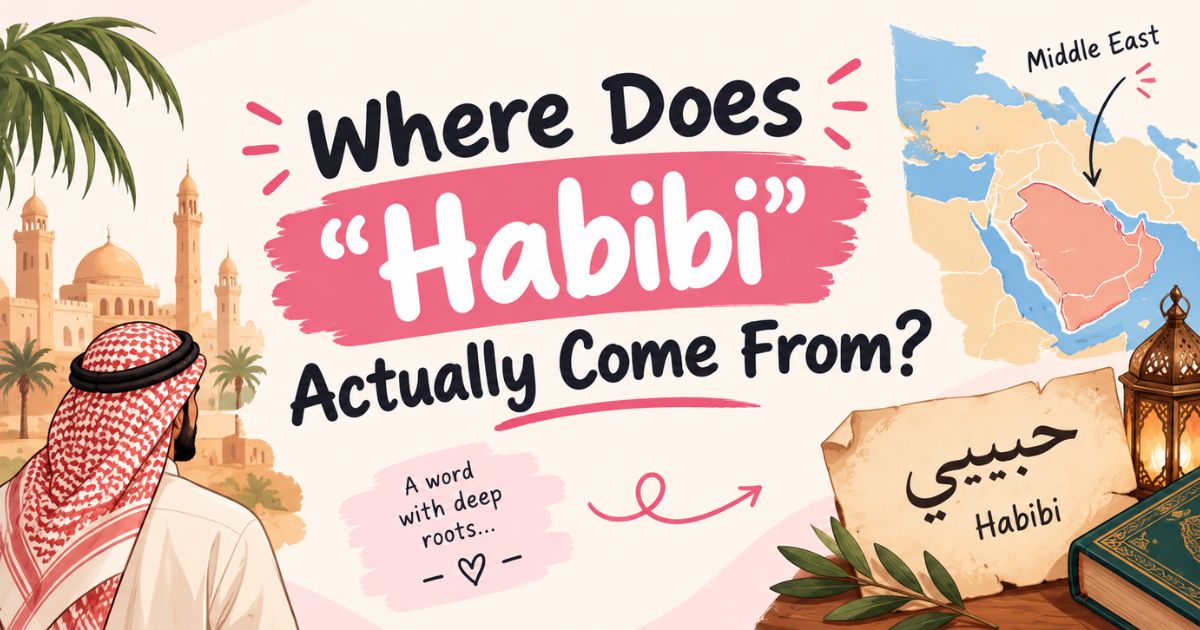
To really understand why habibi carries so much emotional range, it helps to look at its roots. The word traces back to classical Arabic, built from the verb habba, meaning “to love” or “to hold dear.
” Over centuries, this root branched into a whole family of related words habib (beloved), habiba (beloved, feminine), and eventually habibi meaning and habibti, the possessive forms that translate literally to “my beloved.”
This linguistic root is shared across much of the Arab world, from the Gulf states to North Africa, though pronunciation and usage can shift slightly by region. In Levantine Arabic (Lebanon, Syria, Jordan, Palestine), habibi is used constantly and casually in daily speech.
In Gulf Arabic, it carries a similar warmth but can sound slightly more formal depending on the setting. Egyptian Arabic, thanks to decades of film and music exports across the Middle East, helped popularize habibi meaning far beyond its country of origin, embedding it into pop culture long before social media existed.
This shared history explains why the word feels so universally warmity isn’t tied to one dialect or one country, but to a broader Arabic tradition of expressing closeness through language.
It’s also why non-Arabic speakers who travel, work, or build friendships across the Middle East tend to pick it up quickly; it’s one of the easiest words to absorb naturally into everyday conversation.
How “Habibi” Is Used in Real Conversations
In everyday Arabic-speaking households and among the Arab diaspora, habibi meaning gets used constantly often without any romantic undertone at all. A few real-world examples:
- “Habibi, come eat!”a mother calling her child to dinner
- “Relax, habibi meaning, it’s fine.”a friend calming another friend down
- “Thank you so much, habibi.”casual gratitude between coworkers or friends
- “Good morning habibi ❤️”likely romantic, especially with the heart emoji
- “Habibi where are you?”could be a friend checking in, or a partner texting
Notice how punctuation, emojis, and the relationship between the two people completely change the meaning. The word rarely stands alone, context does the heavy lifting.
Is “Habibi” Rude, Flirty, or Offensive?
Habibi is not offensive on its own. It’s a warm, affectionate word rooted in genuine cultural warmth, not an insult or inappropriate term.
That said, it can feel flirty depending on:
- Who sends it (a stranger vs. a close friend)
- What comes with it (emojis like ❤️ or 😘 add romantic weight)
- The timing (late-night texts vs. casual daytime chats)
- Whether it’s used repeatedly in a short conversation
If a stranger you just matched with on a dating app opens with “hey habibi meaning,” it’s almost certainly flirtatious. If your longtime friend says it in a group chat, it’s just friendly slang.
Bottom line: Habibi meaning is rarely rude, sometimes flirty, and almost never offensive unless it’s used sarcastically or mockingly, which is uncommon.
How to Respond When Someone Says “Habibi”
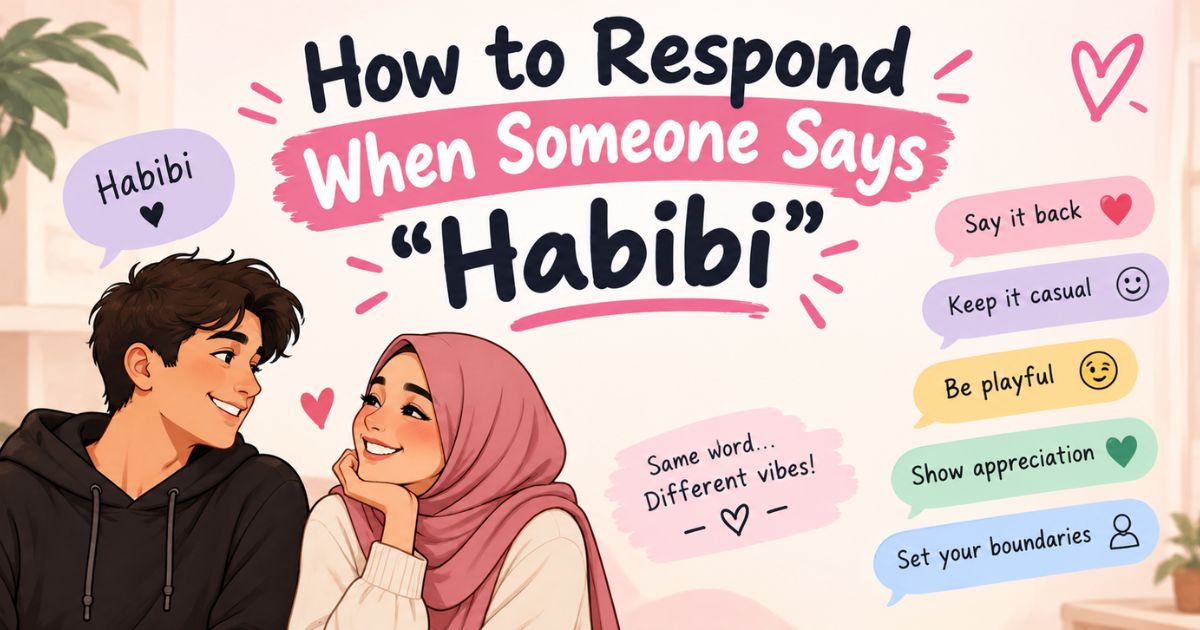
Not sure how to reply? Here are some natural, low-pressure responses depending on the vibe:
- If it feels friendly: “Haha thanks habibi 😄” or simply respond normally to the message
- If it feels flirty and you’re interested: Mirror the energy”Aww, habibi yourself 😏”
- If it feels flirty and you’re not interested: Keep your reply neutral and platonic, without using the term back
- If you’re unsure: Ask casually”Aw, habibi? That’s sweet, are you just being nice or…?” It keeps things light while clarifying intent.
There’s no rulebook requirement to respond with “habibi meaning” back, a warm “thank you” or friendly emoji works just as well.
Common Misunderstandings About “Habibi”
A few myths worth clearing up:
- Myth: Habibi meaning is only romantic. Realityit’s used constantly between friends, family, and even strangers with zero romantic meaning.
- Myth: Only men can use it. Realityboth men and women use habibi regardless of who they’re speaking to.
- Myth: It’s disrespectful to use it if you’re not Arab. Realitymost native speakers appreciate genuine, respectful use of the word, though it’s good to understand its meaning before using it heavily.
- Myth: Habibi and habibti mean the same thing. Realityhabibti is technically the feminine form, though habibi is often used generally online.
- Myth: Habibi meaning always signals deep or serious feelings. Reality because the word is used so frequently in casual speech, it often carries far less emotional weight than the literal translation implies. Many native speakers say it dozens of times a day without thinking twice, the same way English speakers casually toss around “love” or “hun” in passing conversation.
Habibi in Pop Culture and Social Media
Part of why habibi meaning feels so familiar in 2026, even to people with no connection to Arabic-speaking countries, comes down to pop culture.
The word has been showing up in music, film, and viral content for years, slowly working its way into mainstream vocabulary.
Arabic pop and Khaleeji music have long used habibi in song titles and lyrics, often as a direct address to a lover or a general term of warmth threaded through the chorus.
International artists have picked up on this too, sampling or referencing the word in tracks that reach audiences far outside the Middle East.
Movies and TV shows set in the region, along with Arab creators building large followings on YouTube and Instagram, have also helped normalize the word for global audiences.
TikTok deserves special mention here. Viral sounds, comment trends, and reaction videos have turned habibi into something of a meme in its own right, used ironically, affectionately, or just for comedic effect, regardless of whether the person saying it has any connection to Arabic culture.
This is part of why the word can now show up in a gaming Discord server, a K-pop fan account, or a random comment section with zero cultural context attached.
This crossover into meme culture doesn’t erase the word’s original meaning it just adds another layer on top of it.
Native Arabic speakers still use habibi the way they always have, rooted in genuine warmth and closeness, while online communities have simultaneously adopted it as a fun, expressive catchphrase.
Both usages now coexist, which is exactly why the same word can feel deeply sincere in one conversation and purely playful in another.
Similar Slang Terms You Should Know
If you’re learning habibi meaning, these related Arabic terms of endearment often show up alongside it:
| Term | Meaning | Common Use |
| Habibti | My beloved (feminine) | Used toward a girl/woman |
| Habib albi | Love of my heart | Deep romantic affection |
| Ya rouhi | My soul | Very intimate, romantic |
| Ya amar | My moon | Compliment on beauty/charm |
| Ya alby | My heart | Affectionate, close friends or partners |
| Habib | Beloved (base/root form) | Formal or poetic |
Knowing these gives helpful context if you see them alongside habibi meaning in comments, captions, or texts.
When You Should Avoid Using “Habibi”
While habibi meaning is generally harmless, there are a few situations where it’s best left out:
- Professional or formal settings it reads as too casual for workplace emails or serious business chats
- With someone you barely know it can come across as overly familiar or presumptive
- If the other person seems uncomfortable always read the room; not everyone is used to the term
- As a joke that mocks the culture using it mockingly or in a stereotyped way can come across as disrespectful
When in doubt, save it for friends, close contacts, or casual conversations where warmth is welcome.
Also Read This : DWBI Meaning in Text
Final Thoughts
Habibi meaning is one of those rare words that carries real emotional flexibility; it can mean “my love,” “my friend,” or simply “hey there,” depending entirely on who says it and how. In 2026, its popularity on social media has only expanded its reach, turning a heartfelt Arabic term into a global texting staple.
The key takeaway: don’t overthink a single “habibi meaning” text. Look at the relationship, the tone, and the context around it, and you’ll almost always land on the right interpretation.


1 thought on “Habibi Meaning: What It Really Means When Texting in 2026. ”