
If you’ve spotted “DND” in a text, a bio, or a status update and paused to wonder what it actually means, you’re not alone. This tiny four-letter shortcut shows up everywhere in 2026from WhatsApp statuses to gaming lobbies to Instagram captions and its meaning shifts depending on who’s typing it and where.
In most everyday conversations, DND stands for “Do Not Disturb.” It’s a quick, low-effort way to tell people you’re unavailable without writing a full explanation. But DND has a few other lives too, especially in gaming communities and mobile settings, which is exactly why context matters so much.
This guide breaks down every common meaning of DND, shows you how it’s actually used in real conversations, and helps you figure out whether it’s rude, flirty, or perfectly normal depending on the situation.
What Does “DND” Mean in Text?
At its core, DND is short for Do Not Disturb. It signals that someone wants a break from calls, texts, or notifications for a while. Think of it as a digital “please don’t knock” sign.
That said, the letters DND can point to a few different things depending on the platform and the people involved. Here’s a quick breakdown.
DND Meaning in Love
In romantic or relationship texting, DND usually means someone needs emotional space rather than literal silence. A partner might text “on DND today, rough day” to say they need quiet time, not that the relationship is in trouble.
It can also appear more coldly, like “he put me on DND,” which suggests one person is intentionally distancing themselves after an argument or awkward moment.
DnD Meaning Game
Among tabletop gamers, DnD (usually written with a lowercase “n”) refers to Dungeons & Dragons, the classic fantasy role-playing game. If a message says “DnD night got moved to Friday,” it has nothing to do with notifications, it’s about the game session.
DND Meaning in Mobile
On smartphones, DND is a literal built-in feature. Turning on Do Not Disturb mode silences calls, texts, and app alerts, often except for starred contacts or repeated calls. This is where the slang term originally borrowed its meaning from.
DND Meaning in Chat
In chat apps and social platforms, DND is often used loosely rather than technically. Someone might type “on dnd rn” in a group chat simply to say they’re stepping away, even if their actual phone settings haven’t changed at all.
Where the DND Trend Came From
DND didn’t start out as internet slang at all. Long before smartphones existed, hotels used physical “Do Not Disturb” signs on doorknobs to keep housekeeping and staff from interrupting guests. Landline phone systems later borrowed the same idea, letting people block incoming calls during certain hours.
When smartphones introduced a built-in Do Not Disturb setting, the phrase naturally moved into everyday digital language. People began typing “DND” as shorthand in texts simply because it mirrored the phone feature they were already using.
Over time, especially with the rise of messaging apps and social platforms, the term stopped being tied strictly to a phone setting and became a general expression for needing space.
By the time TikTok, Discord, and Instagram exploded in popularity, DND had fully evolved into internet culture. It stopped being just a setting and became a personality trait of sortsa way for people to describe their mood, their boundaries, or even their aesthetic (“DND era” energy).
DND Across Generations and Platforms
Different age groups and platforms tend to use DND slightly differently, which adds another layer to how the term should be interpreted.
- Gen Z: Uses DND loosely and emotionally, often to describe mental health breaks, avoiding drama, or simply needing alone time. Phrases like “I’m in my DND era” are common.
- Millennials: Tend to use DND more literally, referring to actual phone settings or work-related focus time.
- Gamers: Use DND both as the Dungeons & Dragons abbreviation and as an in-app status showing they’re mid-match and shouldn’t be messaged.
- Professionals on Slack or Teams: Use DND as an actual status indicator, letting coworkers know they’re heads-down on a task.
Recognizing which group is using the demand on which app makes it much easier to correctly read the intended meaning instead of assuming the worst.
The Most Common Meanings of DND
Here’s a simple reference table covering the different ways DND shows up online.
| Meaning | Context | Example |
| Do Not Disturb | Texting, social media, phones | “Sorry, missed your callI was on DND.” |
| Dungeons & Dragons | Gaming, tabletop communities | “Can’t hang out, it’s DnD night.” |
| Do Not Dial | Call-blocking lists | Used mostly in telecom or business settings |
| Emotional boundary | Relationships, personal texts | “I’m putting myself on DND this weekend.” |
| Status indicator | Gaming platforms, Discord | Shows a user is busy or unavailable |
In roughly 90% of everyday texting and social media use, DND means Do Not Disturb. The gaming meaning only really applies when the surrounding conversation is clearly about tabletop RPGs.
How DND Is Used in Real Conversations
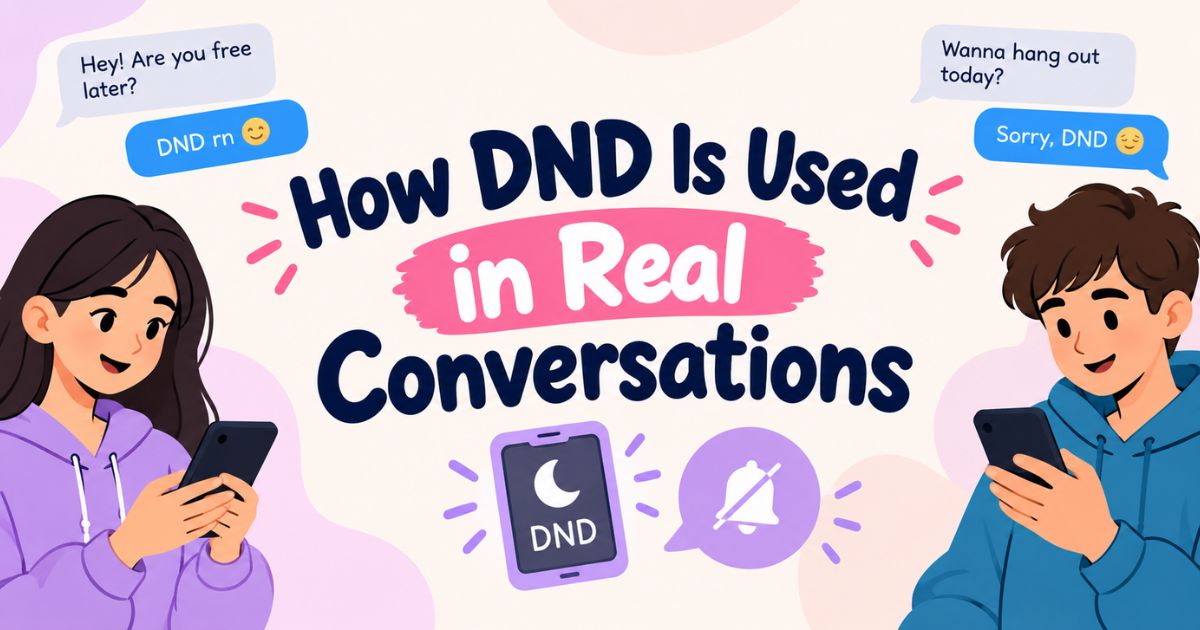
DND rarely shows up as a single standalone word. It’s usually woven into a casual sentence or short reply. Some real-world examples include:
- “Going on DND for the night, talk tomorrow.”
- “My phone lives on DND, just send a text if it’s urgent.”
- “Sorry for the late reply, DND was on.”
- “She’s been on DND since the breakup.”
- “DND mode activated 😴”
On platforms like TikTok and Instagram, people also use DND more playfully. It’s common to see captions like “living my life on DND” to mean someone is ignoring drama, skipping social obligations, or taking a mental break not literally silencing their phone.
In gaming chats and on Discord, a “DND” status next to someone’s username usually just means they’re online but don’t want to be pinged or invited to a call right now.
Is DND Rude, Flirty, or Offensive?
Generally, noDND is considered a neutral and even polite way to set a boundary. It’s far softer than ignoring someone outright, since it gives a reason (being busy, resting, or focusing) without requiring a lengthy explanation.
That said, tone depends heavily on context:
- Neutral/polite: “On DND till this meeting ends, talk soon.” This reads as considerate and clear.
- Cold or distant: “He’s on DND with me” often implies someone is intentionally avoiding contact after a conflict.
- Flirty or playful: In lighter conversations, “putting you on DND 😂” can be a teasing joke rather than a real snub.
DND is rarely used to be outright offensive. It’s more of a soft, low-drama way to signal unavailability than a direct insult.
How to Respond When Someone Says “DND”
If someone tells you they’re on DND, the best response is usually simple respect for their space. Here are a few appropriate replies:
- Acknowledge it briefly“No worries, talk whenever you’re free.”
- Confirm urgency if needed.“Okay, just let me know if it’s urgent.”
- Avoid double-texting repeatedlySending multiple follow-ups defeats the purpose of DND.
- Give them timeDon’t assume silence means something negative.
If the DND message feels emotionally loaded (like after an argument), it’s often better to give the person space rather than pushing for an immediate reply.
Also Read This : WYTB Mean in Text
Common Misunderstandings About DND
There are a few recurring mix-ups people run into with this term:
- Assuming DND means someone is ignoring them personally. Most of the time, it’s about needing a break, not about the other person.
- Confusing DND with being blocked. DND only pauses notifications; it doesn’t prevent messages from being seen later.
- Thinking DND is always permanent. It’s almost always temporary, whether that’s an hour, a day, or a weekend.
- Mixing up DND with “AFK” or “offline.” These terms describe different states of availability, covered in the next section.
Similar Slang Terms You Should Know
Understanding related terms makes it easier to read the tone of a conversation correctly.
| Term | Meaning | How It Differs from DND |
| AFK | Away From Keyboard | Physical absence, usually short and temporary |
| BRB | Be Right Back | Very short break, expected quick return |
| OOO | Out Of Office | Professional, work-related unavailability |
| Ghosting | Cutting off contact entirely | Permanent or long-term, unlike DND’s temporary nature |
| Muted | Notifications silenced for one person/chat | Targeted at a specific person, not a general status |
| Offline | Not connected at all | DND can still mean someone is online but unavailable |
When You Should Avoid Using DND
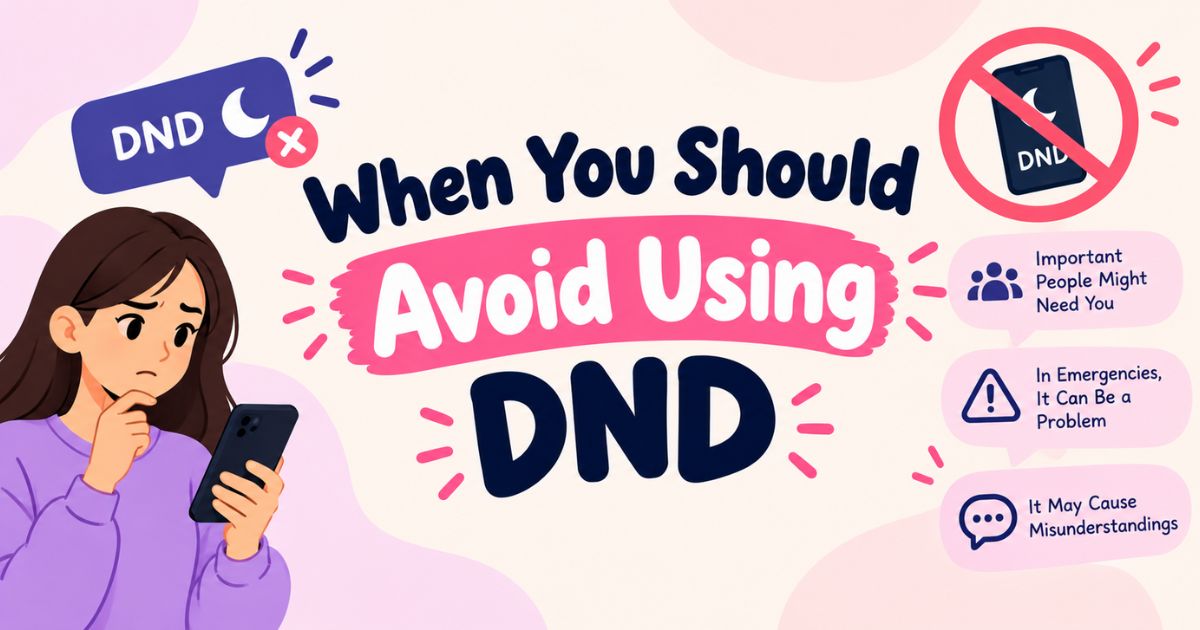
While DND works well in casual settings, there are a few situations where it’s better to skip it:
- Formal emails or business communication phrases like “I’ll be unavailable until 3 PM” sound more professional.
- Sensitive conversations if someone is going through something serious, a short explanation is often kinder than just “DND.”
- When clarity really mattersDND can be vague, so if timing is important, it’s better to give a specific window of unavailability.
Final Thoughts
DND remains one of the simplest yet most useful shorthand terms in modern digital communication. Whether it’s a smartphone setting, a quick text, or a status update, it almost always boils down to one idea: someone needs a little space right now.
Context is everything the same three letters can mean a phone setting, a gaming session, or an emotional boundary depending on where and how they’re used. Once you know the difference, reading DND in any conversation becomes second nature.


1 thought on “What Does DND Really Mean in Text? (2026 Secret) ”