
Someone drops “ONS?” in your DMs, or a dating bio says “no ONS, please.” You stop and wonder what it stands for.
ONS means “one night stand” in text. It’s adult slang for a single, casual encounter between two people who don’t plan to start a relationship. You’ll mostly see it on dating apps, in group chats, and in social media comments.
This guide covers the meaning, where people use it, real chat examples, safe usage tips, and other meanings that can cause mix-ups.
What Does ONS Mean in Text?
ONS = One Night Stand.
In texting, it describes a short, one-time romantic or physical meeting. Both people usually understand it won’t lead to dating or ongoing commitment.
People shorten it for the same reason they shorten “be right back” to BRB. It’s quicker to type, and it sounds a little more discreet than spelling it out.
Quick facts:
- Full form: One Night Stand
- Type: Adult, informal slang
- Tone: Casual, direct, sometimes flirty
- Common users: Young adults on dating apps and social media
- Best for: Private chats between people who know each other
ONS Meaning Slang on TikTok
On TikTok, ONS shows up in comments, captions, storytime videos, and dating-advice clips. Creators use it when they talk about short-term hookups, “situationships,” and dating regrets.
It’s often joked about rather than said seriously. A caption like “Tell me you’ve had an ONS without telling me” invites people to share their own stories in the comments.
The meaning stays the same on TikTok. Only the tone changes: it’s usually more playful and more public.
What Does ONS Mean on Instagram?
On Instagram, ONS mainly appears in DMs, close-friends stories, memes, and comment threads. The meaning is still “one night stand.”
Some people also use it in a “not looking for ONS” line when they want to set boundaries. Since Instagram is public-facing, many users avoid the term on their main feed and save it for private chats.
ONS in a Relationship Context
ONS is the opposite of a committed relationship. Here’s how they differ:
| Feature | ONS | Relationship |
| Duration | One night or one meeting | Ongoing |
| Emotional commitment | Usually none | High |
| Future plans | None | Shared |
| Communication after | Rare | Regular |
| Expectations | Short-term | Long-term |
If someone says “I’m not into ONS,” they’re telling you they want something more meaningful. If someone says “it was just an ONS,” they mean it didn’t turn into anything.
Where Is ONS Commonly Used?
You’ll find ONS in mostly informal, dating-related spaces:
- Dating apps: Tinder, Bumble, Hinge, and similar apps, often in bios or first messages.
- Text messages and WhatsApp: Between close friends sharing stories.
- Instagram DMs and comments: Usually private or joking.
- TikTok: Comments, captions, and relationship-advice videos.
- Snapchat and group chats: Casual conversations among friends.
- Reddit and forums: Advice threads about dating and boundaries.
It rarely appears in formal writing, email, or workplace chat, and for good reason.
Examples of ONS in Conversation
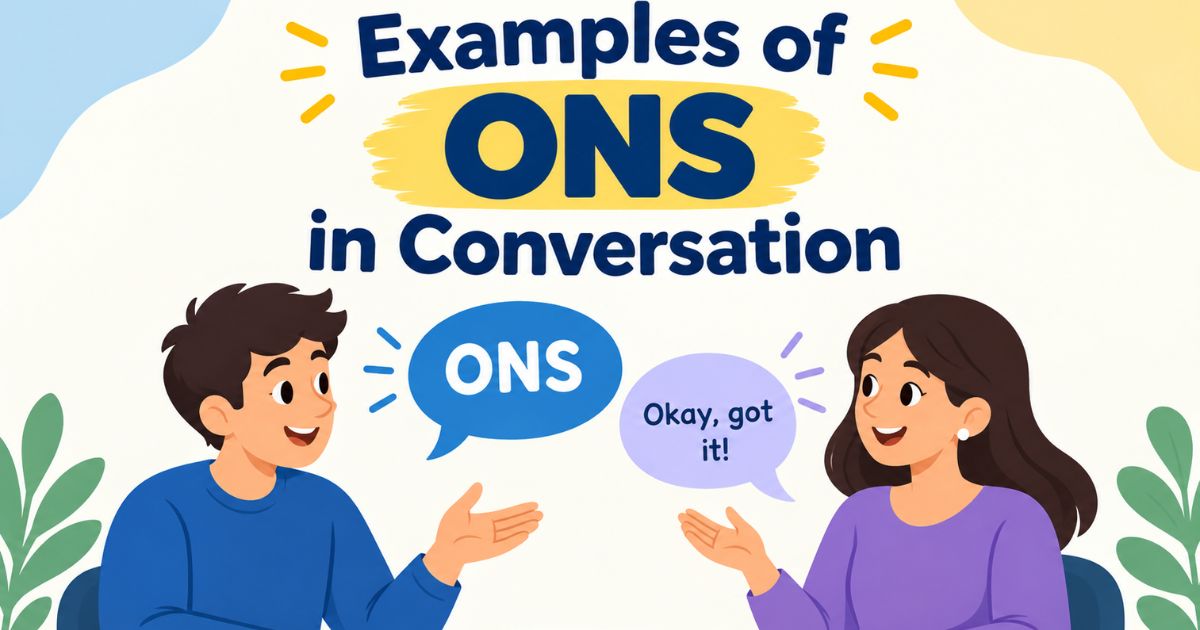
Seeing it in context is the fastest way to get it. Here are a few short exchanges.
Example 1: Friends catching up
A: Are you seeing that guy from the party again? B: Nah, it was just an ONS. A: Got it.
Example 2: On a dating app
A: Just so you know, I’m not looking for an ONS. B: Totally fine, I’m after something real too.
Example 3: Setting expectations
A: Are we dating or is this an ONS? B: Honestly, I’d like to see where it goes.
Example 4: Joking on social media
Comment: That trip turned into an ONS situation 😂
Example 5: Talking about regret
A: Do you regret it? B: Not really. It was ONS and we both knew that.
Notice how the abbreviation works as a noun. You can say “an ONS,” “just ONS,” or “ONS vibes.”
How ONS Became Popular Slang
The phrase “one night stand” is much older than texting. What changed is the shortcut. Once dating apps took off, people wanted a fast way to state what they were looking for without writing a paragraph. Acronyms like LOL, BRB and IMO had already trained everyone to shorten common phrases, so ONS fit right in.
Social media pushed it further. TikTok trends, Reddit advice threads and meme pages all helped the abbreviation spread beyond dating apps. Today, many young adults recognize it instantly, even if they never use it themselves.
There is also a cultural side. Talking openly about casual dating is far more common than it was a decade ago, and slang makes those talks feel lighter. Still, the term carries weight for many people, which is why tone and timing matter.
When to Use and When Not to Use ONS
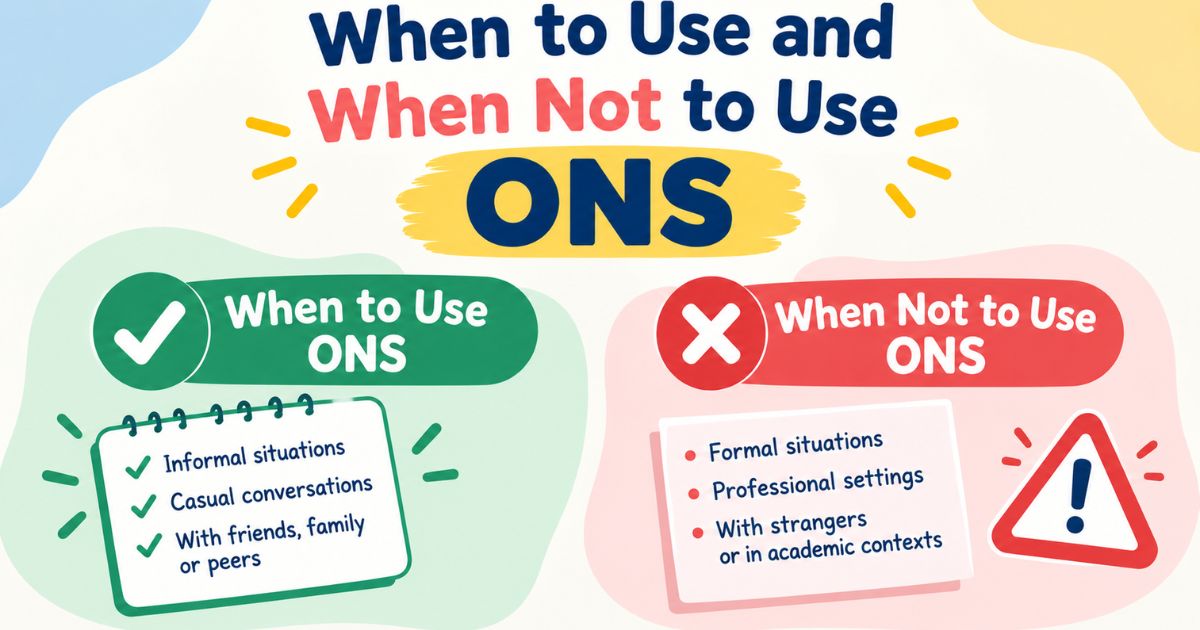
ONS is personal slang, so context matters more than usual.
When It’s Okay to Use ONS
- In private chats with friends you trust
- When you’re stating your boundaries on a dating app
- In casual, adult conversations where the topic already came up
- When you want to clear up expectations quickly
When You Should Avoid ONS
- At work or in any professional message
- In school or formal writing
- In family group chats
- With someone you barely know, unless the topic is already on the table
- Around minors
A simple rule: if you’d hesitate to say “one night stand” out loud in that setting, don’t type ONS either.
Tips for Using ONS Responsibly
- Be clear about what you want.
- Respect the other person’s answer.
- Never pressure anyone.
- Keep the conversation private when possible.
Different Meanings or Misunderstandings of ONS
In texting, ONS almost always means “one night stand.” But the same letters stand for other things elsewhere, and that’s where confusion happens.
| Meaning | Where It’s Used |
| Office for National Statistics | UK government and data reports |
| Oral Nutritional Supplements | Healthcare and dietetics |
| Oncology Nursing Society | Medical and nursing organizations |
| Object Naming Service | Tech and supply-chain systems |
| Onslow Airport (IATA code) | Aviation |
| Ons (Jabeur) | The tennis player, whose first name is Ons |
There’s also a simple language quirk. In Dutch, “ons” is a common word meaning “us” or “our,” so a message from a Dutch speaker likely has nothing to do with dating.
How to tell which meaning is intended:
- Look at the platform. A dating app points to one night stand.
- Check the topic. Statistics, health, or flights point to a professional meaning.
- Look at the tone. Casual and personal usually means slang.
- When in doubt, just ask.
Similar Slang Words or Alternatives
ONS often appears next to other dating slang. They’re related, but they aren’t identical.
| Term | Meaning | How It Differs from ONS |
| FWB | Friends with benefits | Ongoing casual arrangement, not one time |
| Situationship | An undefined romantic connection | Lasts longer, with unclear labels |
| Hookup | A casual physical encounter | Broader term, can repeat |
| NSA | No strings attached | Describes the arrangement, not just one night |
| Fling | A short romance | Can last days or weeks |
| Casual dating | Seeing people without commitment | More dating-focused, less physical focus |
Polite alternatives if you want to avoid ONS:
- “Just something casual”
- “Nothing serious”
- “A one-time thing”
- “Not looking for anything long-term”
Why People Use ONS in Texting
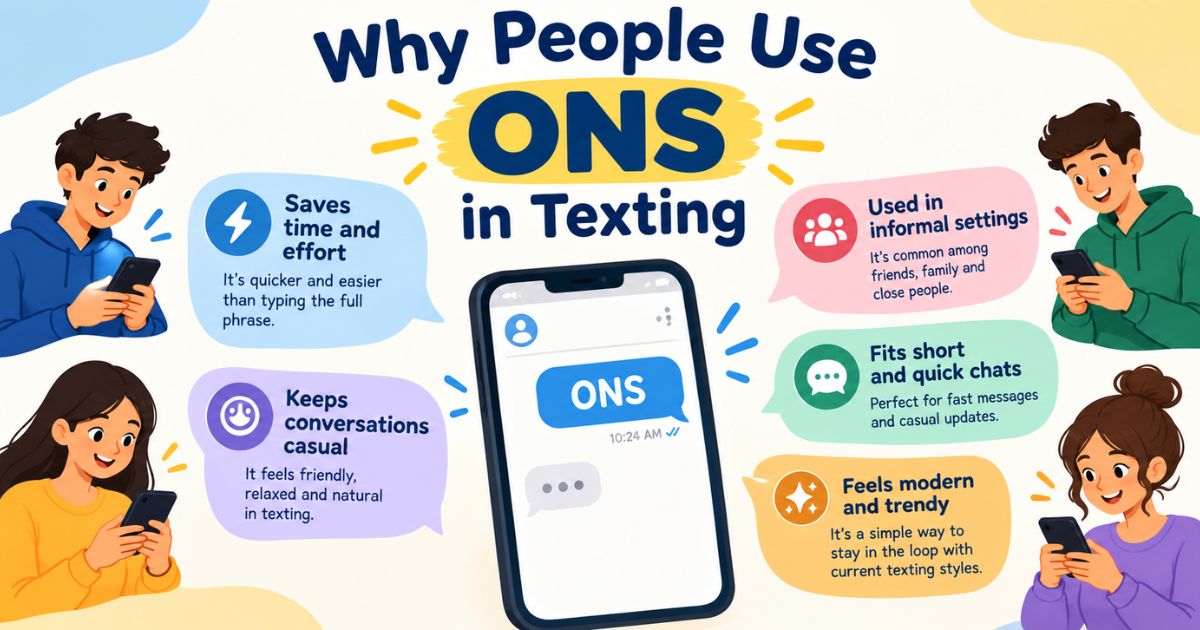
There are a few clear reasons this abbreviation stuck.
- Speed. Three letters beat three words.
- Discretion. It feels less blunt than writing it out.
- Dating culture. Apps encourage short, direct communication.
- Shared understanding. Most people on dating platforms already know it.
- Clarity. It states expectations without a long explanation.
- Humor. On social media, it’s an easy shorthand for jokes and stories.
How to Respond When Someone Texts You “ONS?”
Getting this message can feel awkward, especially if you didn’t expect it. You have options, and none of them require an over-explained answer.
If you’re interested:
- Say so plainly, for example: “Yeah, I’m open to something casual.”
- Agree on boundaries before you meet, such as privacy, expectations and what happens afterward.
If you’re not interested:
- Keep it short and firm: “Not for me, thanks.”
- You don’t owe a long reason. A clear “no” is enough.
If you’re unsure:
- Ask a direct question: “What are you looking for?”
- Take your time. Feeling unsure is a valid answer.
A good reply is honest, calm and respectful. If the other person keeps pushing after you say no, that’s a red flag, and you can end the chat.
Safety and Consent Tips Around ONS
Because ONS involves real-life meetings, a few habits go a long way. This isn’t about judging anyone’s choices. It’s about staying safe and treating others well.
- Consent comes first. Everyone involved should be an adult and should agree freely, with no pressure and no guilt-tripping.
- Meet in a public place first. A cafe or bar lets you get a feel for the person before going anywhere private.
- Tell a friend. Share where you’re going and who you’re meeting.
- Use your own transport. That way you can leave whenever you want.
- Protect your health. Talk about protection and get regular checkups.
- Trust your gut. If something feels off, leave. You don’t need a reason.
- Guard your privacy. Think twice before sharing photos, your address or workplace details.
What Happens After an ONS?
The days after can feel different for different people. Some feel relaxed and move on. Others feel a bit awkward or start to hope for more. Both reactions are normal.
If you both agreed it was a one-time thing, the kindest move is to stay consistent. A brief, polite message like “Had a good time, take care” closes things without confusion. If one of you develops feelings, say it honestly instead of dropping hints. Mixed signals cause most of the hurt in casual situations.
It also helps to remember that “ONS” is a description of expectations, not a judgment of anyone’s character. Two adults who agree on what they want and treat each other with respect have done nothing wrong.
Common Mistakes People Make With ONS
A few slip-ups cause most of the confusion around this slang:
- Assuming everyone knows it. Older relatives or new acquaintances may not.
- Using it in the wrong chat. A group message with mixed ages is a poor place for it.
- Reading too much into it. One “ONS?” A message doesn’t mean someone is judging you.
- Skipping the follow-up. If expectations are unclear, ask before you assume.
Is ONS Romantic or Serious?
Usually, no. ONS is not romantic, and it isn’t used to signal a serious relationship. It describes a one-time encounter without a plan for a future together.
That said, feelings can be complicated. Some people develop real connections after a first meeting, and a few ONS stories do turn into relationships. But the term itself points to something brief and casual.
If you want something serious, say so clearly. And if someone says they’re only after an ONS, take them at their word rather than hoping they’ll change their mind.
Also Read This : SS Mean in Text
Conclusion
ONS means one night stand in text. It’s casual, adult slang used mainly on dating apps, TikTok, Instagram, and in private chats. It’s not romantic, and it isn’t meant to describe a serious relationship.
Use it only in the right setting, with the right people, and be honest about what you want. If the context points to statistics, healthcare, or something else entirely, the meaning shifts, so always read the situation first.
Now the next time “ONS” lands in your inbox, you’ll know exactly what it means and how to respond.


1 thought on “What Does ONS Mean in Text? Ultimate Guide & Examples 2026 ”