
You’re scrolling through a group chat or your DMs, and someone drops “js” at the end of their sentence. If you’ve ever paused wondering what js meaning in text actually is, you’re far from alone this tiny abbreviation shows up everywhere, from texts and Instagram comments to TikTok captions and Snapchat replies, and it trips up a lot of people, especially if they’re used to “JS” meaning JavaScript.
The short answer: in texting, JS almost always stands for “just saying.” It’s one of many shorthand phrases that grew out of a broader shift toward faster, tone-controlled digital communication, letting people share honest opinions without sounding too serious.
There’s more nuance to it than that one definition, though, and knowing when (and when not) to use it can save you from sounding passive-aggressive or confusing. Let’s break it all down.
What Does JS Mean in Text? (Simple Explanation)
In everyday texting slang, JS = Just Saying.
It’s a small phrase people tack onto the end of a message to make it feel lighter, softer, or less confrontational. Instead of stating an opinion flatly, adding “js” gives the sentence a shrug like the sender is saying, “take it or leave it, I’m not trying to start anything.”
For example:
- “You could’ve told me earlier, js.”
- “That outfit looked better on you yesterday, js.”
- “I’m just js-ing, don’t take it personally.”
Think of “js” as a verbal cushion. It softens criticism, makes suggestions feel less demanding, and gives the receiver room to brush the comment off if they want to.
Why Do People Use JS in Texting?
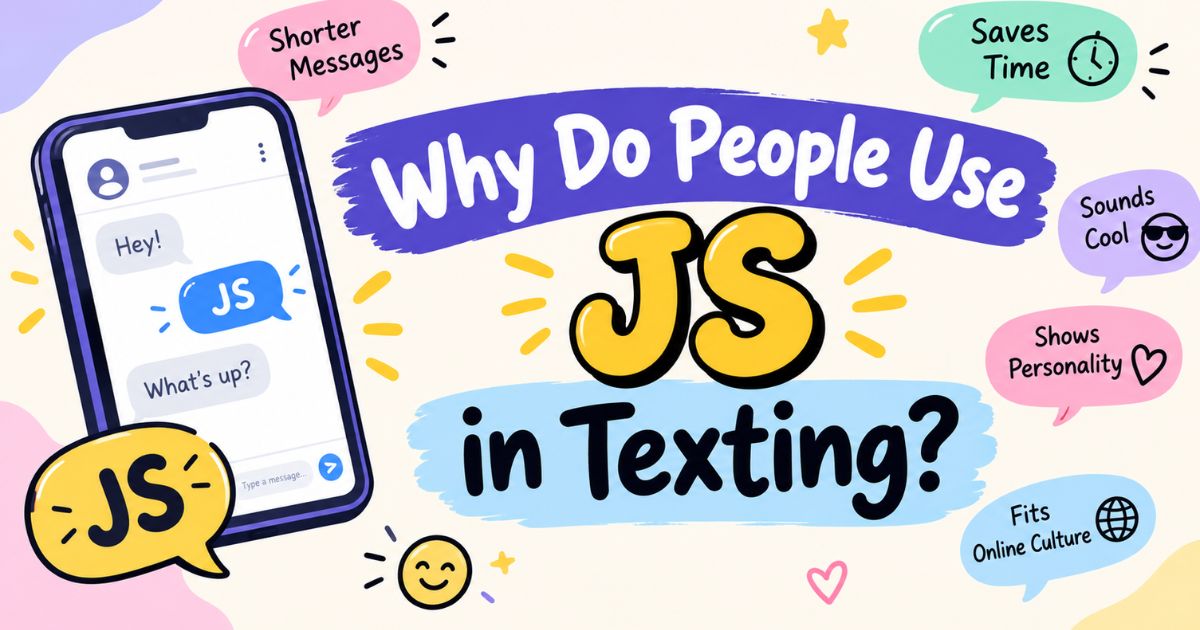
People reach for “js” because typing out “just saying” every time feels slow, and because the abbreviation carries the exact same casual, low-pressure tone. A few common reasons people use it:
- To share an honest opinion without sounding harsh
- To make gentle suggestions or advice feel optional
- To add humor or sarcasm without seeming too serious
- To end an argument-adjacent statement without inviting a debate
- To keep messages short in fast-paced chats
It’s essentially social armor, a way to say something real while keeping the emotional stakes low.
Js Meaning in Text Funny
Used in a joking context, “js” adds a teasing, lighthearted punch to a statement, like “You always forget my birthday, js 😂.” It signals playful honesty rather than a real complaint.
Js Meaning in Text Spanish
In Spanish-language texting, “js” is still typically borrowed from English slang and means “just saying” (a veces escrito como “solo digo”). It’s used the same casual way among bilingual or Spanish-speaking younger audiences online.
Js Meaning in TikTok
On TikTok, “js” appears in comments and captions to mean “just saying,” usually softening an opinion about a video, trend, or someone’s take. It keeps comments feeling casual instead of confrontational.
Does JS Mean Just in Text?
Yes, occasionally. In some contexts, “js” is shorthand for the single word “just,” as in “js kidding” or “js checking in.” However, “just saying” remains the far more common meaning.
Js Meaning in Relationship
In a relationship or romantic text, “js” often softens jealousy, a complaint, or an insecure thought, like “You’ve been busy lately, js.” It can also add a flirty, teasing edge depending on the conversation.
Js Meaning in Instagram
On Instagram, “js” shows up in comments and DMs to mean “just saying,” usually when someone wants to share an opinion on a post without sounding like they’re picking a fight.
Js Meaning in Urban Dictionary
Urban Dictionary entries for “js” generally define it as “just saying,” often noting its sarcastic or passive-aggressive undertone depending on how it’s used in a sentence.
Js Meaning in School
Among students, “js” is used in group chats and classroom banter to soften jokes, complaints about teachers, or gossip, keeping the tone casual rather than serious.
Different Meanings of JS (Less Common but Important)
While “just saying” dominates casual texting, “js” isn’t always locked to that one meaning. Context changes everything.
| Meaning | Where You’ll See It |
| Just Saying | Texting, social media, group chats |
| Just | Casual shorthand, e.g., “js kidding” |
| Just Suggesting | Advice-giving conversations |
| Just Sharing | Sharing info or news casually |
| JavaScript | Coding, tech, and web development discussions |
The rule of thumb: if the conversation is emotional or casual, it’s “just saying.” If it’s technical, it’s almost certainly JavaScript.
JS Meaning in Text vs JS Meaning in Coding
This is where a lot of confusion happens, especially for people who work in tech or are learning to code.
- In texting: JS = Just Saying
- In coding: JS = JavaScript, one of the most widely used programming languages for building websites and web apps
If your friend who’s a developer texts “gotta fix a bug in JS,” they’re talking about JavaScript, not softening a comment. But if that same friend says “you’re always late, js,” it’s clearly the texting slang version.
Context, the topic, the platform, and the tone will almost always tell you which meaning applies.
Examples of JS Used in Real Text Messages
Seeing “js” in action makes the meaning click faster than any definition. Here are some realistic message examples:
- “I think you should’ve asked first, js.”
- “Not trying to be dramatic, js, but that was kind of rude.”
- “You’d look great in that jacket, js.”
- “We should hang out more, js.”
- “I’m not mad, just a little confused why you didn’t text back.”
Notice how in each case, “js” softens the statement and reduces the chance of it sounding like an attack.
Origins & History of JS (Where Did It Come From?)

The abbreviation “js” traces back to the early SMS era, when phones limited messages to around 160 characters. To fit more into fewer characters, texters shortened common phrases:
- OMG (oh my god)
- LOL (laugh out loud)
- IDK (I don’t know)
- BRB (be right back)
- BTW (by the way)
“Just saying” naturally got the same treatment, becoming “js.” As texting culture merged with social media Instagram, Twitter, Snapchat, TikTok the abbreviation carried over and became a staple of casual online communication.
What kept “js” alive long after character limits stopped mattering is its tone-softening power. Even on platforms with no length restrictions, people still choose “js” over the full phrase because the abbreviation itself has become part of the message’s personality.
Typing out “just saying” in full can actually feel more pointed or deliberate, almost like you’re emphasizing the comment rather than brushing it off. The shortened version, by contrast, feels breezy and unbothered which is often exactly the vibe the sender wants.
This is a common pattern in internet slang: abbreviations that start as space-savers evolve into stylistic choices that carry their own emotional weight, separate from the original phrase they came from.
When Should You Use JS? (Best Situations)
“JS” works best in relaxed, informal settings where the relationship allows for casual honesty. Good situations include:
- Texting close friends or family
- Group chats with people you know well
- Social media comments among peers
- Light banter or playful teasing
- Softening small opinions or observations
When You Should NOT Use JS
There are moments where “js” can backfire or seem out of place. Avoid it when:
- Messaging in a professional or formal setting (emails, work Slack, official documents)
- Talking to someone you don’t know well
- The topic is sensitive, serious, or emotionally heavy
- You’re trying to apologize sincerely (it can undercut the sincerity)
- Clarity matters more than casualness
Common Misunderstandings About JS
A few myths about “js” tend to cause unnecessary confusion:
- It’s not always sarcastic. Tone depends entirely on the sentence, not the abbreviation itself.
- It’s not automatically rude. “JS” is neutral; it can soften either a kind comment or a harsh one.
- It’s not always passive-aggressive. Many people use it purely for brevity, not for hidden meaning.
- It doesn’t always mean JavaScript. Only assume that in tech-specific conversations.
Another misunderstanding worth mentioning: people sometimes assume “js” carries a fixed emotional weight, as if it always softens or always stings. In reality, its effect changes based on punctuation, capitalization, and the words surrounding it.
“JS” in all caps at the end of a heated message can read as more forceful, almost like an exclamation, while lowercase “js” tucked quietly into a sentence usually feels gentler. Reading the whole message, not just the abbreviation, is the only reliable way to judge intent.
Alternatives to JS (If You Want to Sound Clearer)
If you’d rather avoid ambiguity, there are several natural alternatives that carry a similar tone:
- “No offense, but…”
- “Just my opinion”
- “Not to be dramatic, but…”
- “Just a thought”
- “Take it or leave it”
- “Just putting it out there”
These phrases communicate the same soft, low-stakes intention without relying on an abbreviation that some readers might misread.
Also Read This : Girlie or Girly
Similar Abbreviations People Use in Texting
“JS” belongs to a much bigger family of texting shorthand. A few common ones worth knowing:
| Abbreviation | Meaning |
| IMO | In My Opinion |
| TBH | To Be Honest |
| NGL | Not Gonna Lie |
| FR | For Real |
| ONG | On God |
| SMH | Shaking My Head |
Like “js,” most of these exist to make casual conversation faster and more expressive without sounding overly formal.
Conclusion
At its core, the js meaning in text comes down to one simple phrase: “just saying.” It’s a small, versatile abbreviation people use to soften opinions, ease tension, and keep conversations feeling relaxed rather than confrontational.
While it can occasionally mean “just” or refer to JavaScript in tech conversations, the casual “just saying” definition dominates everyday texting and social media.
The next time you see “js” pop up in a chat, you’ll know exactly what’s going on and you’ll be able to use it (or avoid it) with confidence, depending on the tone you’re going for.


1 thought on “JS Meaning in Text: What Does JS Really Mean? (2026 Guide) ”