
You are scrolling through a group chat and someone writes, “Ngl, that outfit was on fire.” Quick question: is that a compliment, a joke, or a warning? It depends on tone, and that is exactly why this tiny slang term confuses so many people.
This guide explains the meaning of NGL in chat, where it came from, how it works on Instagram and WhatsApp, and how to reply without sounding awkward. Short paragraphs, real examples, no fluff.
Meaning of NGL in Chat – Quick Meaning
NGL stands for “not gonna lie.” People type it before or after a statement to show they are being honest, direct, or a little vulnerable.
It works as a signal. It tells the reader, “What I’m about to say is my real opinion.”
Quick facts:
- Full form: Not gonna lie
- Type: Internet slang, texting abbreviation
- Tone: Casual, honest, sometimes blunt
- Best used in: Texts, DMs, group chats, comments, captions
- Avoid in: Formal emails, job applications, academic writing
Examples:
- “Ngl, I forgot about the test.”
- “That movie was better than I expected, ngl.”
- “I’m kind of nervous about tomorrow, ngl.”
Origin and Background of NGL
The phrase “not gonna lie” has been part of spoken English for a long time. It was a natural fit for texting, where shorter is better. Early chat platforms, forums, and later Twitter (now X) pushed people to shorten everything, so “not gonna lie” became NGL.
Social media then carried it to a much wider audience. Instagram captions, Snapchat messages, and TikTok comments all helped make NGL a default way to introduce an honest take.
One thing to know: NGL is also the name of a popular anonymous-messaging app. The app borrowed the slang for its brand, so you may see “NGL” used for the app too. In normal chat, though, it almost always means “not gonna lie.”
Other meanings (rare): In the energy industry, NGL means natural gas liquids. Context makes it obvious, and you will almost never see this one in a casual chat.
Real-Life Conversations Using NGL
Here is how NGL sounds in everyday chats.
Example 1: Admitting something
Aisha: Did you finish the assignment? Zain: Ngl, I haven’t even started.
Example 2: Giving a compliment
Sara: I wore this to the interview. Hira: Ngl, you look amazing.
Example 3: Gentle criticism
Ali: Thoughts on my new song? Usman: Ngl, the chorus is great but the intro drags a bit.
Example 4: Sharing a feeling
Maya: Why so quiet today? Noor: Ngl, I’ve been feeling a little low.
Notice the pattern. NGL appears when the speaker wants to be real, not polished.
Also Read This : LYT Meaning in Text
Meaning of NGL on Instagram
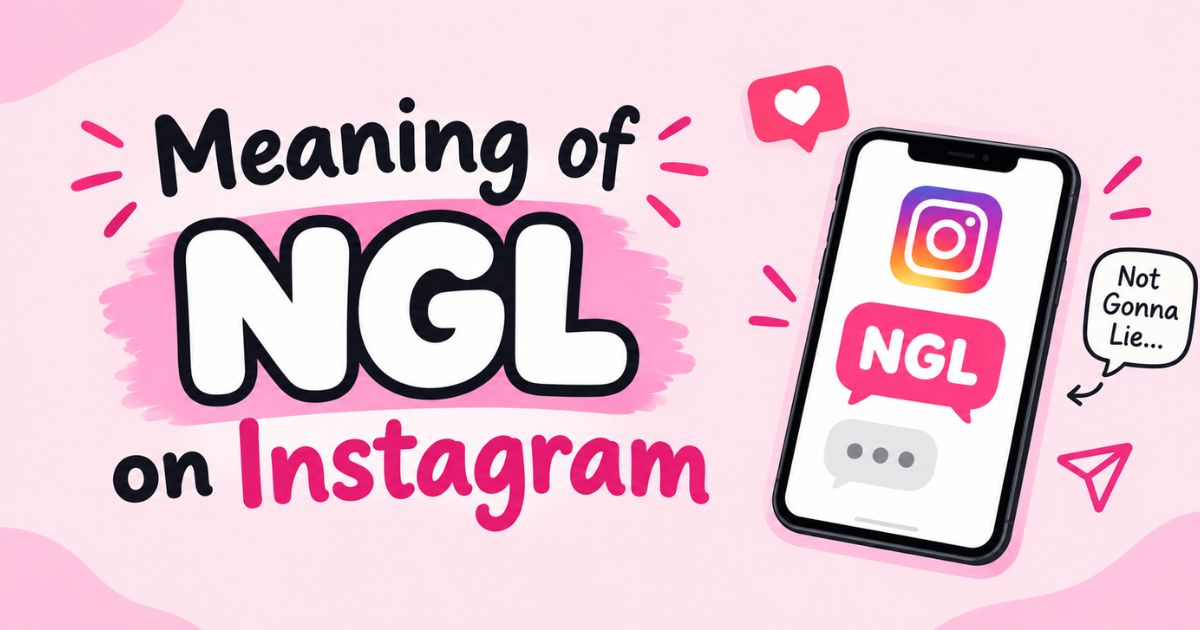
On Instagram, NGL shows up in DMs, comments, Stories, and captions.
Common uses:
- Captions: “Ngl, this was the best trip of my life.”
- Comments: “Ngl, this reel made my day.”
- DMs: “Ngl, I saw your story and had to reply.”
The meaning stays the same: “not gonna lie.” On Instagram, it often adds a casual, friendly feel, especially between friends or followers who know each other.
Tip: If you see “NGL” in a Story sticker or link, it may refer to the anonymous-question app. Check the context before you assume.
Meaning of NGL on WhatsApp
On WhatsApp, NGL means exactly the same thing: not gonna lie. Because WhatsApp is used for close friends, family groups, and even work chats, the tone varies a lot.
How it is used:
- Friend chats: “Ngl, I miss our college days.”
- Group chats: “Ngl, that plan sounds exhausting.”
- Voice-note replies in text: “Ngl, I couldn’t hear half of it.”
Be careful in work groups. Colleagues and managers may find it too casual. In a professional chat, write “To be honest” or “Honestly” instead.
NGL Meaning From a Girl
This is one of the most searched questions, so let’s keep it simple. When a girl says “ngl,” it means the same as anyone else: “not gonna lie.” There is no secret code.
What changes the meaning is context and tone. Here is how to read it:
| What she says | What it likely means |
| “Ngl, you’re funny.” | A genuine, friendly compliment |
| “Ngl, I was hoping you’d text first.” | Honest, possibly showing interest |
| “Ngl, that was a bit rude.” | Soft but real disagreement |
| “Ngl, I’m tired of this.” | Honest frustration or emotional release |
Don’t over-read it. One “ngl” is not a confession of feelings. Look at the full message, her usual texting style, and what happened before.
The Emotional and Psychological Meaning Behind NGL
NGL is small, but it does real emotional work.
It Softens Honesty
Saying a hard truth is easier with a buffer. “Ngl, I didn’t like it” feels lighter than “I didn’t like it.”
It Builds Trust
Admitting something honestly makes people feel closer. That is why NGL often appears right before a personal confession.
It Lowers the Pressure
NGL lets people share a feeling without making it a big, serious moment. It is a way to be open while staying casual.
It Can Be a Shield
Sometimes people use NGL to say something risky and keep an exit route. If the other person reacts badly, they can say, “I was just being honest.”
Usage of NGL in Different Contexts
The same two words can sound different depending on where you put them.
1. Compliments
“Ngl, your presentation was really strong.”
2. Confessions
“Ngl, I’ve been procrastinating all week.”
3. Disagreement
“Ngl, I don’t think that’s a good idea.”
4. Criticism (softened)
“Ngl, the ending felt rushed.”
5. Emphasis
“This pizza is so good, ngl.”
Where to place NGL
- At the start: Prepares the reader for honesty.
- At the end: Adds a casual, afterthought feel.
- Mid-sentence: Less common, but natural in fast chats.
Common Misunderstandings About NGL
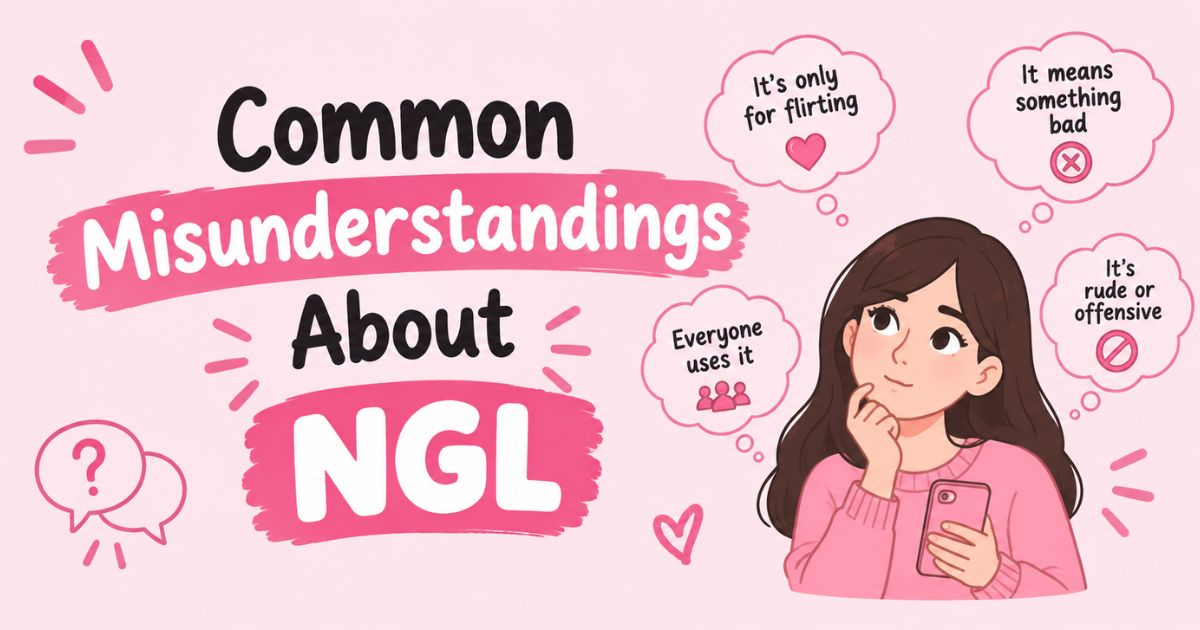
Many people get this one wrong. Here are the most frequent mix-ups:
- “NGL always means something negative.” Not true. People use it for compliments just as often.
- “NGL means someone is hiding something.” No. It simply flags honesty.
- “NGL is the same as the NGL app.” The app is a separate product. The slang predates it.
- “It’s rude.” Usually it is not. Rudeness comes from what follows it, not from NGL itself.
- “It’s okay everywhere.” It is informal. Skip it in formal writing.
- “It always means the speaker is being brutally honest.” Often it is just a habit, like adding “honestly.”
Comparison Table: NGL vs Similar Terms
| Term | Full Form | Tone | Typical Use |
| NGL | Not gonna lie | Honest, casual | Opinions, confessions, compliments |
| TBH | To be honest | Honest, slightly softer | Opinions, light criticism |
| IMO | In my opinion | Neutral, polite | Debates, reviews |
| IMHO | In my humble opinion | Polite, sometimes sarcastic | Forums, online discussions |
| FR | For real | Agreeing or emphasizing | Reactions, agreement |
| ONG | On god | Strong emphasis | Swearing something is true |
| No cap | No lie | Confident, youthful | Backing up a claim |
Quick takeaway: NGL and TBH are almost interchangeable. NGL often feels slightly more casual and personal.
Variations and Related Expressions
You will see NGL in several forms:
- ngl (lowercase) – the most common version
- NGL (caps) – feels more emphatic
- ngl tho – “not gonna lie though,” used to add a contrast
- ngl fr – “not gonna lie, for real,” for extra sincerity
- ngl lowkey – a mild, understated honest feeling
- ngl but – leads into a surprise or a softer opinion
- nglll – stretched out for humor or drama
Similar expressions with the same job:
- Honestly
- To be honest
- Real talk
- Not going to lie
- Frankly
- I’ll be real with you
How to Respond When Someone Uses NGL
You do not need a fancy reply. Match the tone of the message.
Step-by-step
- Read the full message. What did they actually say?
- Check the mood. Is it playful, serious, or vulnerable?
- Answer the content, not the “ngl.”
- Be kind if it was a confession.
Reply examples
| They say | You can reply |
| “Ngl, you look great today.” | “Thank you, that made my day!” |
| “Ngl, I’m nervous about tomorrow.” | “You’ve got this. Want to talk it through?” |
| “Ngl, I didn’t like the movie.” | “Fair enough! What bothered you most?” |
| “Ngl, that joke was bad.” | “Okay, that one was bad. I’ll do better.” |
| “Ngl, I forgot to call you.” | “No worries, call me when you’re free.” |
Avoid replying with “Why are you being rude?” unless the content was truly hurtful. NGL alone is not an insult.
Regional and Cultural Usage
NGL is global internet slang, but usage differs a little by region.
- United States and Canada: Very common among teens and young adults, especially on Snapchat, TikTok, and Instagram.
- United Kingdom and Ireland: Common, often alongside local slang like “innit” or “fr.”
- South Asia (India, Pakistan, Bangladesh): Widely used in English-language chats, often mixed with local languages, like “Ngl yaar, this was so good.”
- Australia and New Zealand: Used casually, usually in text and social media.
- Non-English-speaking regions: English slang like NGL is often borrowed into local chats, especially among younger users.
Generational note: Younger users treat NGL as natural. Older users may still be learning it, so a quick “not gonna lie” works better when writing to parents or older relatives.
Conclusion
The meaning of NGL in chat is simple: not gonna lie. What makes it interesting is how much it does in just three letters. It adds honesty, softens opinions, and helps people open up.
Remember three things:
- NGL always signals honesty, but tone decides the meaning.
- It works on Instagram, WhatsApp, Snapchat, and almost every chat platform.
- Keep it for casual conversations and use “to be honest” in formal ones.
Next time you see “ngl” in your inbox, you will know exactly how to read it, and how to reply.


1 thought on “What Does NGL Really Mean in Chat? Real Uses & Tips (2026)”