
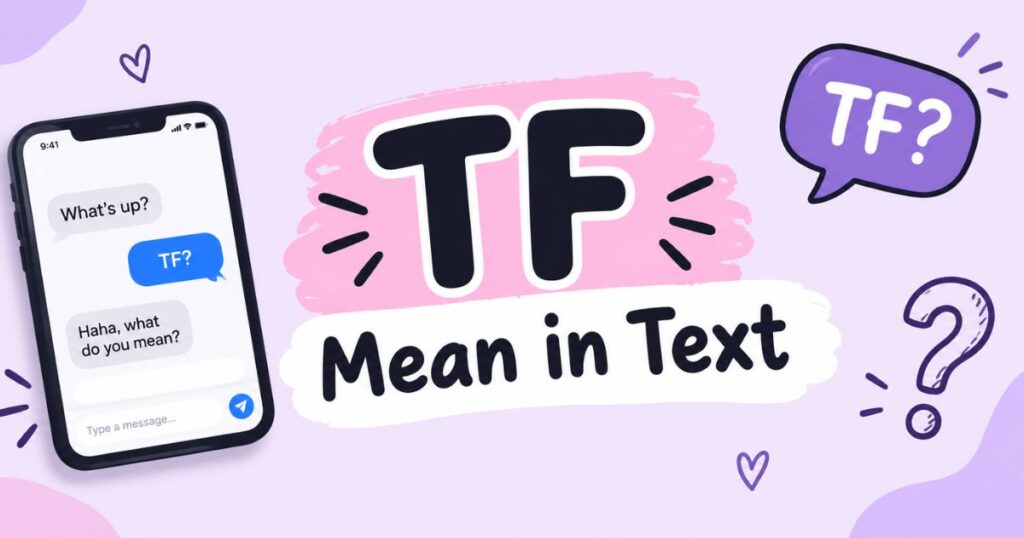
You open a chat and see a message that says just “TF?” Nothing else. No context, no emoji. Is the person angry? Shocked? Joking?
That confusion is exactly why people search for the tf meaning in text. The two letters look harmless, but they carry a lot of attitude. This guide explains what TF means, where it came from, how people use it in real chats, and when you should keep it out of your messages.
Quick Answer: What Does TF Mean in Text?
TF stands for “the f*.”** It is a shortened, slightly censored way to add shock, confusion, anger, or emphasis to a sentence. It is most often a shorter cousin of “WTF” (what the f***).
Two quick examples:
- “Who TF is this?” = “Who on earth is this?”
- “TF?!” = “What? Are you serious?”
That is the meaning in about 90% of casual chats. The rest depends on context, which we’ll cover below.
What Does “TF” Mean in Text?
In everyday texting, TF works as an intensifier. It rarely carries meaning on its own. Instead, it boosts the emotion of the words around it.
Compare these two questions:
- “What is that?” is a neutral question.
- “What TF is that?” signals surprise, disgust, or disbelief.
TF can appear in two main ways:
- Inside a sentence. Examples: “Where TF are you?” or “Why TF would he say that?”
- As a standalone reaction. Example: replying “TF.” to a shocking photo or news.
Because it is so short, TF fits the fast pace of texting, gaming chat, and comment sections. Every character counts, and people like quick ways to show a big feeling.
Where Did TF Come From?
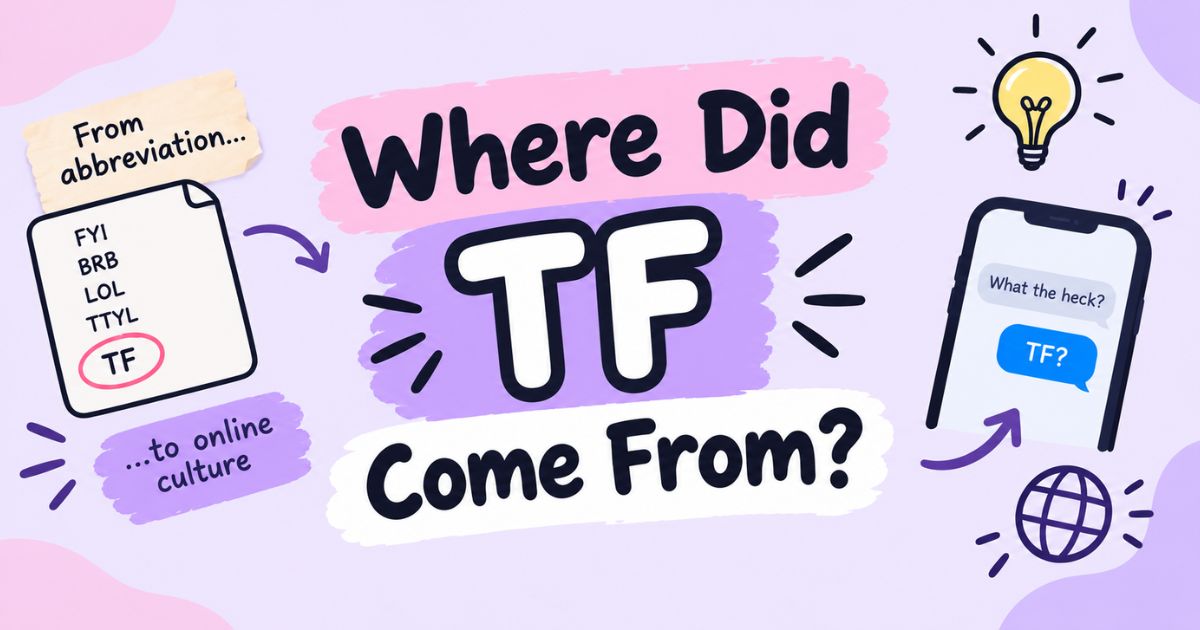
The phrase behind TF is older than the internet. Reference sources such as Dictionary.com trace “the f***” back to the early 1900s as a stronger version of “the hell.” Once “WTF” became popular in the 1980s, people started trimming phrases down even more, and TF spread in online chats through the 2000s.
Today it lives on text apps, social media, and gaming lobbies. It is a good example of how slang gets shorter over time.
Why People Use TF Instead of the Full Phrase
There are a few simple reasons this abbreviation caught on:
- Speed. Two letters are faster to type than a full sentence, especially during a live game or a fast group chat.
- A softer look. Typing “TF” feels less harsh than writing out the whole swear word, even though everyone knows what it stands for.
- Filter friendly. Some platforms and school or work networks flag strong words. Abbreviations often slip through.
- Natural rhythm. People write the way they talk. In speech, “what the f***” often turns into a quick, clipped sound, and TF copies that rhythm on screen.
This is also why you will often see TF written in lowercase. It looks casual, almost like a shrug, and it matches the relaxed tone of most online chats.
The Most Common Meanings of “TF”
Most sources agree on one dominant meaning, plus a few rare ones that depend on the setting.
| Meaning | Where You See It | How Common |
| The f*** | Texts, DMs, comments, gaming chat | Very common |
| Twisted Fate | League of Legends chat | Common in gaming |
| Team Fortress | PC gaming communities (TF2) | Common in gaming |
| Task force | Work, news, government | Common in formal use |
| Too funny | Casual chats, some social posts | Rare |
| Transfer | Work and finance notes | Rare |
1. TF as an Expression of Shock
This is the classic use. Something surprising happens, and TF says it fast.
“I just got the job.” “TF?! That’s amazing!”
2. TF as Confusion
When you don’t understand something, TF signals “I’m lost.”
“TF is going on in this group chat?”
3. TF as Anger or Frustration
Here the tone turns sharper. The message often has a question mark and a complaint.
“Why TF didn’t you tell me earlier?”
4. TF as Disgust or Disbelief
People also use it when they react to something gross, weird, or hard to believe. A photo of an odd food combo might get a simple “tf.”
5. TF in Gaming and Work
In gaming, TF often points to a character or game name. In a workplace email, a “TF” is usually a task force. If the setting is formal or technical, don’t assume the slang meaning.
How “TF” Is Used in Real Conversations
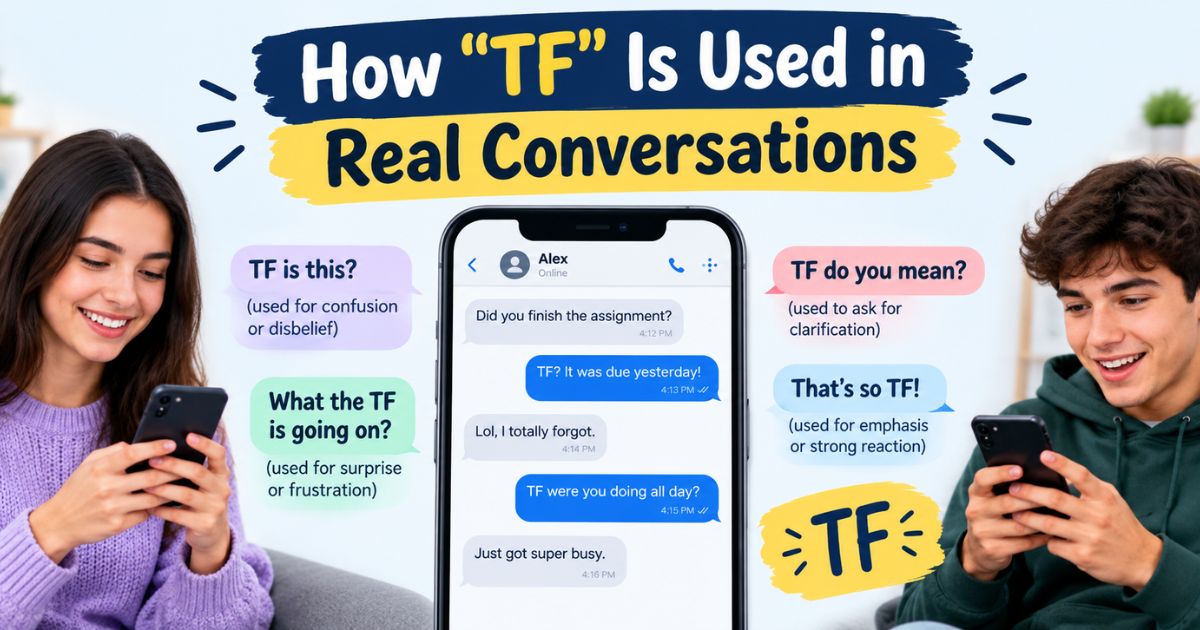
Real chats are the best way to learn slang. Here are a few situations where TF shows up.
Texting a friend
- Friend: “My phone fell in the pool.”
- You: “TF?! Is it dead?”
Social media comments
- Under a strange viral clip: “tf did I just watch”
Gaming chat
- After a teammate walks into an obvious trap: “TF was that play?”
Asking about an unknown number
- “Who TF is this?” is a blunt way to ask who is texting you.
Tone Clues That Change the Meaning
The same two letters can feel very different. Watch for these signals:
- Question mark or exclamation: “TF?!” usually means shock.
- Emoji: “TF 😂” reads as funny. “TF 😡” reads as angry.
- Capital letters: “TF” or “WHAT TF” feels louder than lowercase “tf.”
- A period alone: “TF.” can feel flat, cold, or annoyed.
- The relationship: Close friends joke this way. Strangers may take it as hostile.
Where TF Shows Up Across Platforms
| Platform | Typical Use | Typical Tone |
| iMessage / WhatsApp | Reacting to news or gossip | Casual, surprised |
| TikTok / Instagram comments | Reacting to a video | Joking or shocked |
| X (Twitter) | Reacting to a take or headline | Annoyed or sarcastic |
| Discord / gaming lobbies | Reacting to plays or bugs | Frustrated |
| Work chat | Usually avoided | Unprofessional |
Is “TF” Rude, Flirty, or Offensive?
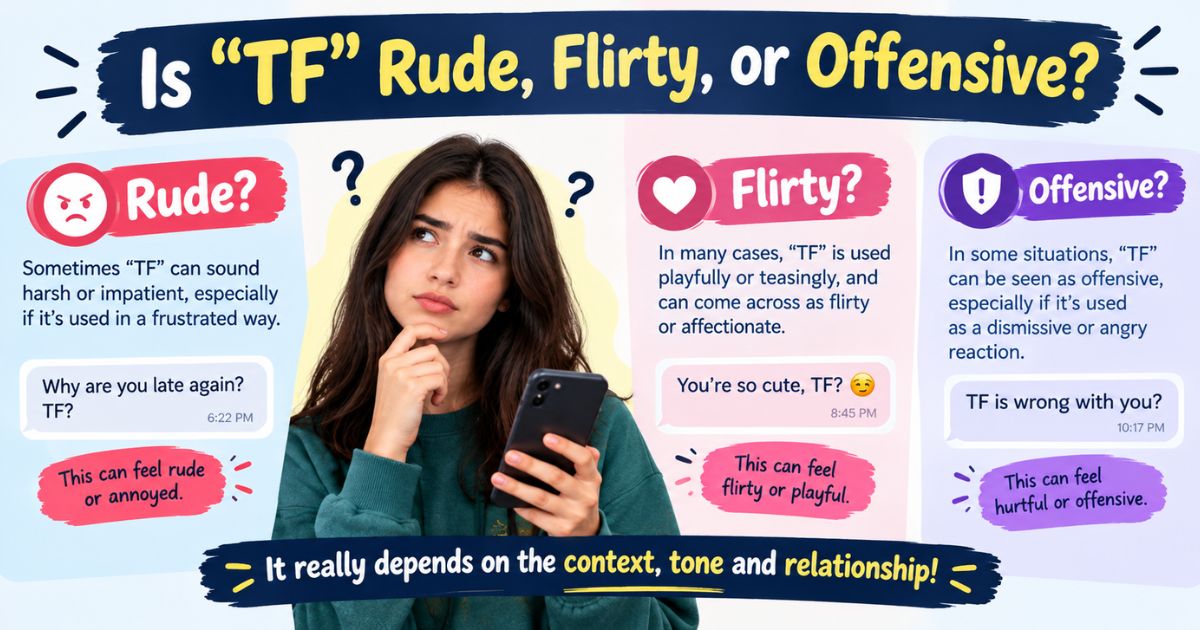
Short answer: it can be rude, but it is usually just casual. It is never truly “polite,” because it comes from a swear phrase.
When It Feels Rude
- You use it toward someone you don’t know well.
- You aim it at a person, as in “What TF is wrong with you?”
- You send it in a serious or emotional conversation.
When It Feels Harmless
- You use it about a situation, not a person (“TF is this weather?”).
- You are joking with close friends.
- Both people already swear casually in chats.
Is TF Flirty?
Not by itself. In a playful chat between two people who like each other, “TF mean, you did not just say that 😏” can feel teasing. But the flirty vibe comes from the emoji and the relationship, not from the abbreviation.
How to Respond When Someone Says “TF”
Your reply should match the emotion behind the message. Try this simple approach:
- Read the tone. Is it shock, confusion, or anger?
- Answer the real question. If they asked “TF is this?”, explain what it is.
- Keep it calm. If they sound upset, don’t match the heat.
- Add humor if it’s a friend. A light reply can ease the moment.
Reply Ideas by Situation
| Situation | Example Reply |
| They’re shocked | “I know, right? I couldn’t believe it either.” |
| They’re confused | “Sorry, let me explain. Here’s what happened.” |
| They’re angry | “I hear you. Let’s sort this out.” |
| They’re joking | “Told you it was wild 😂” |
| You’re unsure | “Do you mean that in a good way or bad way?” |
If a message feels aggressive and you don’t know the sender, you can simply ask for clarity or stop replying.
Common Misunderstandings About “TF”
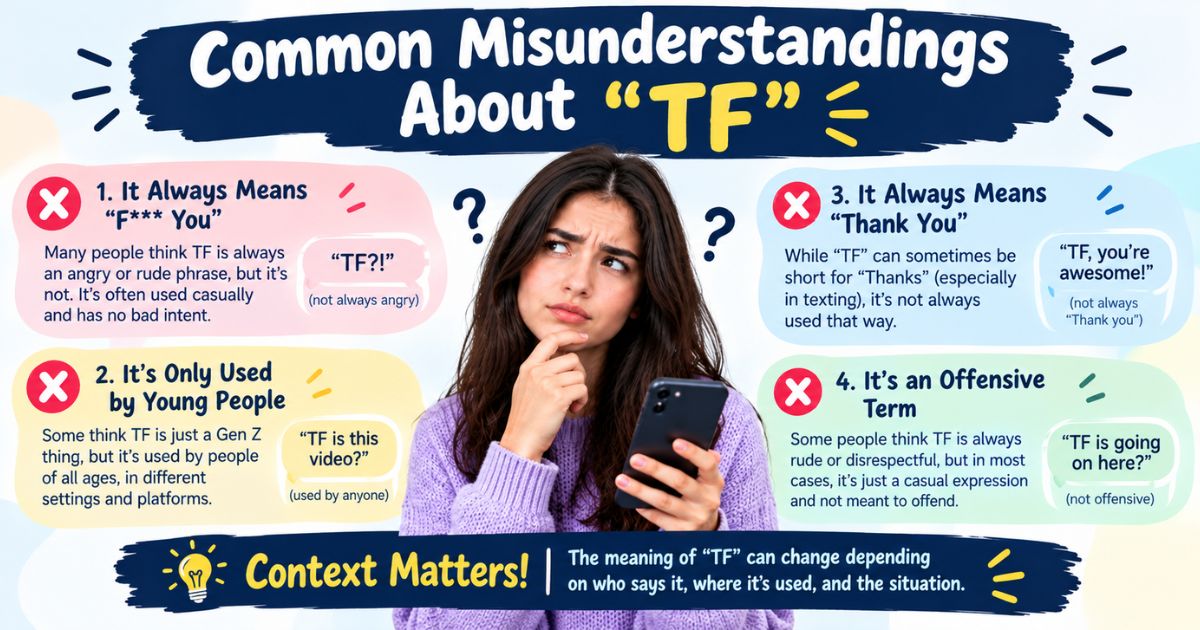
Many people get TF mean wrong in the same few ways.
- “TF mean always means anger.” Not true. It is often just surprise or excitement.
- “TF mean and WTF are identical.” They are close, but WTF is the fuller, more recognized phrase. TF mean usually sits inside a sentence.
- “It’s safe for work.” It isn’t. Treat it like a mild swear word.
- “It has one meaning everywhere.” Gaming, business, and even science use TF mean for other things.
- “It is only for young people.” Slang spreads across ages, though older users may still find it harsh.
Similar Slang Terms You Should Know
If you know TF mean, you’ll spot these easily.
| Slang | Meaning | Tone |
| WTF | What the f*** | Shock or anger |
| STFU | Shut the f*** up | Rude, aggressive |
| GTFO | Get the f*** out | Shock or command |
| IDK | I don’t know | Neutral |
| SMH | Shaking my head | Disappointed |
| FR | For real | Casual, agreeing |
| OMG | Oh my God | Surprise, milder |
| WYD | What are you doing | Neutral, friendly |
| TFW | That feeling when | Relatable, humorous |
Milder swaps for TF mean: “the heck,” “the hell,” “WTH,” or “what on earth.” These keep the emotion without the swear word.
When You Should Avoid Using “TF”
Some places call for cleaner language. Skip it when:
- Messaging your boss, client, or teacher. It looks unprofessional.
- Writing emails or work chats. Even relaxed teams may not appreciate it.
- Talking to someone new. You can’t predict how they’ll react.
- Speaking with family members who dislike swearing.
- Handling a conflict. TF can add fuel to an argument.
- Posting on public accounts tied to your job or brand.
A simple test: if you wouldn’t say the full phrase out loud in that setting, don’t type the short version.
Also Read This : AWL Meaning in Text
Tips for Using TF Without Sounding Harsh
If you do use TF mean with friends, a few small habits keep your message friendly:
- Aim it at the situation, not the person. “TF mean is this traffic?” lands much softer than “TF mean is wrong with you?”
- Add a light emoji. A 😂 or 😭 tells the reader you’re reacting, not attacking.
- Follow up with context. A short line like “I’m just shocked” stops people from guessing your mood.
- Don’t overuse it. If every message has TF in it, the word loses its punch and your tone starts to feel angry all the time.
- Read the room. If the other person never swears in chats, match their style.
Text has no facial expression or voice tone, so tiny choices like punctuation and emoji do a lot of the work. A quick second look before you hit send can save you an awkward misunderstanding.
Final Thoughts
The tf mean in text is simple once you know the pattern. In most chats, TF mean is short for “the f***,” and it adds shock, confusion, or anger to a message. The tone depends on the situation, the punctuation, and who you’re talking to.
Use it with friends when the mood is relaxed. Skip it in work chats and first conversations. And when you receive a “TF? mean”, read the context before you react. Nine times out of ten, the person is just surprised.


1 thought on “What Does TF Mean in Text? The Shocking Real Truth in 2026 ”