If someone just replied “YWA” to your text and you’re staring at your phone trying to figure out if they’re mad at you, you’re not alone. This little four-letter combo shows up everywhere Snapchat, Instagram DMs, group chats, even TikTok captions and it trips up a lot of people the first time they see it.
The good news? YWA isn’t complicated once you know the context. This guide breaks down exactly what YWA means, where it came from, when people use it, and how to reply the right way so you never send the wrong vibe.
What Does YWA Mean in Text?
YWA most commonly stands for “You’re Welcome Anyway.”
It’s a reply people send after helping someone or answering a question especially when the other person didn’t say “thank you,” said it late, or the situation didn’t go exactly as planned. Instead of sounding annoyed, YWA lets someone acknowledge the effort in a lighter, half-joking way.
A few less common variations also float around depending on the platform and the crowd:
- You’re Welcome Always – a warmer version, usually meant sincerely
- Yeah, Whatever, Anyway – a dismissive use, mostly seen when someone wants to shut a topic down
- Young, Wild, and Ambitious – used in Instagram captions and motivational posts, unrelated to gratitude
- You’re Welcome Anytime – a friendlier twist on the original meaning
Out of all of these, “You’re Welcome Anyway” is by far the one people mean 90% of the time in everyday texting.
Why YWA Is Used in Digital Conversations
Texting culture runs on speed. Nobody wants to type out full sentences when three or four letters get the point across just as well. YWA fits that need perfectly because it:
- Saves time compared to typing “you’re welcome anyway”
- Adds personality and tone without needing extra words
- Signals familiarity it’s the kind of shorthand you use with people you’re comfortable with
- Works as a light, non-confrontational way to point out that a “thank you” was missing
It’s part of a much bigger trend of abbreviated replies (think WYA, NGL, IYKYK) that let people keep conversations quick without sounding cold.
There’s also a small psychological layer to why YWA works so well. Saying “you’re welcome” outright can sometimes feel like fishing for recognition, while staying silent after a favor can feel passive-aggressive.
YWA sits comfortably in between it lets someone acknowledge their own effort without sounding needy, and it lets the other person off the hook without an awkward, drawn-out exchange. That balance is a big part of why it caught on so quickly among younger texters who value efficiency as much as tone.
Group dynamics play a role too. In friend groups and gaming lobbies, YWA often becomes an inside joke as much as an actual response. Once one person in the chat starts using it, others tend to pick it up simply because it fits the group’s overall texting style. This is a common pattern with internet slang in general usage that spreads socially long before it spreads because of any “official” meaning.
Origin of YWA Meaning in Text
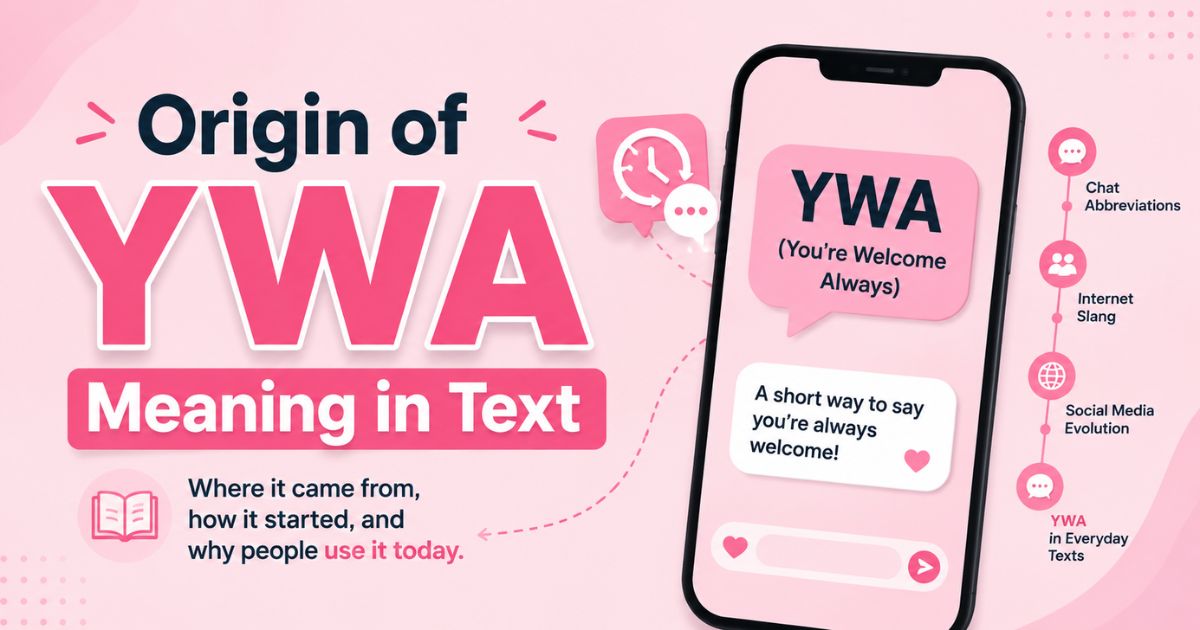
There’s no single moment when YWA was “invented” ; it grew naturally out of texting and instant messaging culture, the same way abbreviations like LOL, BRB, and TTYL did. As SMS plans limited character counts and typing on small keyboards was slow, shortening common phrases became second nature.
YWA picked up real momentum once messaging moved to apps like Snapchat, Instagram, and group texts, where quick, casual replies are the norm rather than the exception. Gen Z and younger millennials are largely responsible for keeping it in regular rotation, especially in situations where a plain “you’re welcome” feels too stiff.
How Different Age Groups Use YWA
Not every generation uses YWA the same way, and that’s worth knowing before you send it.
- Teens and Gen Z tend to use it the most freely, often several times a day, mixed with other abbreviations and emojis, and rarely with any deeper meaning attached.
- Young adults and millennials tend to reserve it for closer friends rather than casual acquaintances, and they’re more likely to notice sarcastic undertones.
- Older adults are the least likely to use it unprompted, but many recognize it once it’s explained, especially if their kids or younger coworkers use it around them.
This generational gap is one of the biggest reasons YWA sometimes gets misread. A teenager sending YWA to a friend almost never means anything beyond “no worries,” while an older or less online recipient might interpret the same message as cold or clipped simply because they’re less used to seeing gratitude expressed in shorthand.
Is YWA Always Polite? Tone Explained
Not always and this is the part that confuses people most. YWA can land anywhere between genuinely sweet and quietly sarcastic. The tone depends entirely on context.
| Tone | What It Usually Means | Example Trigger |
| Friendly | Casual, no hidden meaning | Reply among close friends |
| Sarcastic | Pointing out a missing “thank you” | Silence after helping someone |
| Warm | Genuine appreciation, reassurance | Paired with emojis like 😊 or ❤️ |
| Dismissive | Ending a conversation or shutting a topic down | Used alone with no punctuation |
If you’re ever unsure how someone meant it, look at what came before the message, whether emojis were used, and how well you know the person. A YWA from a close friend rarely carries any bite. A YWA with no emoji from someone you don’t know well might be worth a second look.
Common Situations Where YWA Is Used
YWA tends to show up in a handful of recurring scenarios:
- After doing a favor without getting thanked the classic use case
- Responding to a delayed “thanks” when gratitude comes late
- Wrapping up a help request that didn’t fully solve the problem
- Group chats, where it keeps replies short and moves the conversation along
- Social media captions, unrelated to gratitude, often paired with hashtags like #YWA
Real-Life Examples of YWA Meaning in Text
| Message | Reply | Meaning |
| “Thanks for the notes!” | “YWA 😊” | Genuine, friendly acknowledgment |
| (No thank-you sent after a favor) | “YWA.” | Slightly pointed reminder |
| “Appreciate you for helping me move.” | “YWA, anytime!” | Warm and sincere |
| “Thanks for listening to me vent.” | “YWA 💛” | Supportive, caring tone |
| “Sorry, forgot to say thanks earlier!” | “YWA lol” | Playful, no hard feelings |
YWA vs You’re Welcome: What’s the Difference?
They’re related, but they’re not interchangeable in every situation.
| You’re Welcome | YWA | |
| Formality | More formal, safe for any setting | Casual, best for texts and DMs |
| Tone | Neutral and polite | Can be playful, warm, or sarcastic |
| Best used with | Coworkers, strangers, formal messages | Friends, family, social media |
| Implies | Simple acknowledgment | Sometimes implies a missing “thank you” |
If you’re texting a boss, a client, or someone you don’t know well, stick with “you’re welcome.” Save YWA for people who’ll actually understand the context behind it.
Is YWA Slang or Abbreviation?
Technically, YWA is both. It’s an abbreviation because it’s built from the first letters of a longer phrase, and it’s slang because its meaning shifts with tone, platform, and relationship, something a strict abbreviation like “ASAP” doesn’t really do. That flexibility is exactly why it needs context to be understood correctly.
Also Read This Blog : What Does Linklater Mean?
How to Use YWA Correctly
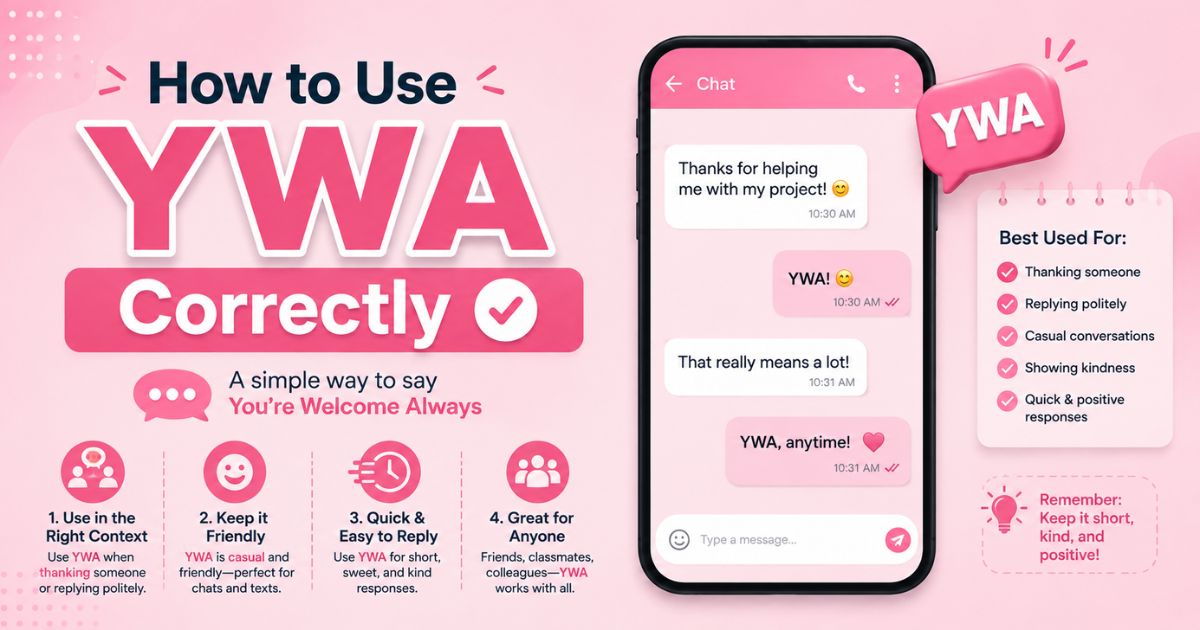
A few simple habits will keep you from sending the wrong impression:
- Match the tone of the conversation playful chats call for a playful YWA
- Add emojis when you want to soften it or make the friendly meaning obvious
- Avoid it in professional messages, emails, or with people you don’t know well
- Read the room before using it after a favor that didn’t go smoothly
- Don’t overuse it like most slang, it loses impact if it’s in every message
It also helps to think about timing. Sending YWA immediately after doing someone a favor, before they’ve even had a chance to say thanks, can come across as presumptuous or a little passive-aggressive.
It works best as a genuine reply either right after a “thank you” lands, or as a light callback a bit later in the conversation once it’s clear the other person simply forgot to acknowledge the help.
Punctuation matters more than people realize, too. “YWA!” with an exclamation point that reads as upbeat and casual, while “YWA.”
with a period can come across as flat or even irritated, even if that wasn’t the intent. If you’re not sure how a message will land in plain text, adding a quick emoji is usually the safest way to make your tone unmistakable.
Common Mistakes People Make with YWA
- Using it in formal or work conversations, where it can come across as unprofessional
- Sending it without any emoji or context, which can make it sound colder than intended
- Assuming it always means the same thing across every friend group or platform
- Mistaking it for other similar-looking abbreviations like WYA or YW
- Taking it too personally when it was meant as a light joke
Similar Text Slang to YWA
| Abbreviation | Meaning |
| YW | You’re Welcome |
| WYA | Where You At |
| NP | No Problem |
| IYKYK | If You Know, You Know |
| YWAA | You’re Welcome Always and Anytime |
| GG | Good Game (also used to close out a topic) |
YWA in Social Media vs Text Messages
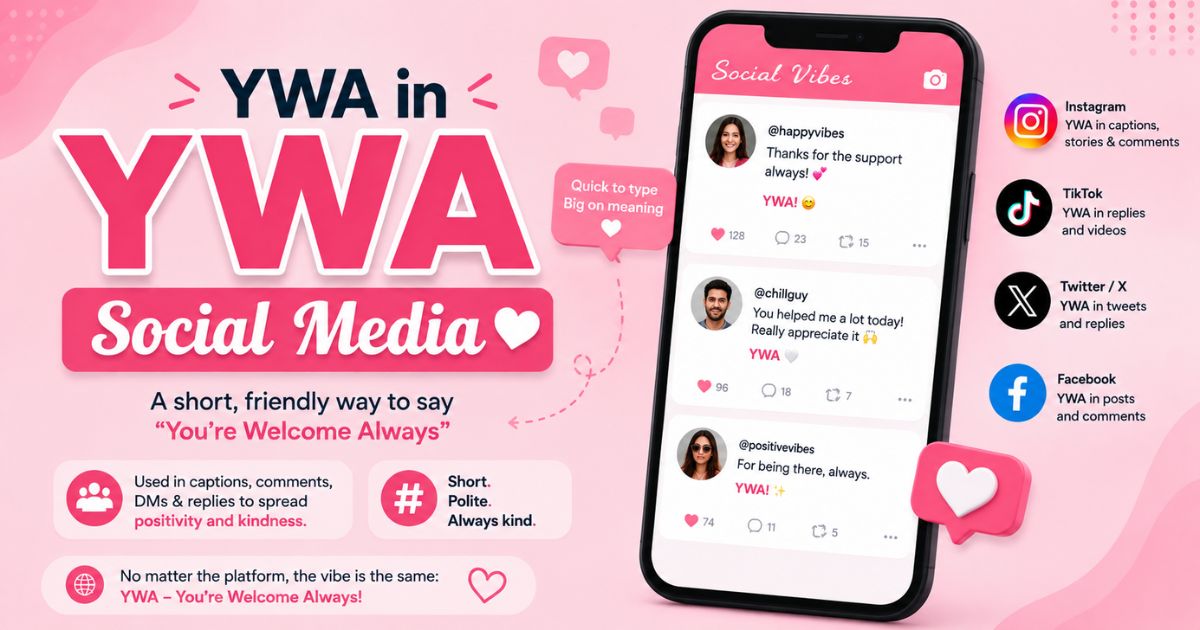
The meaning shifts slightly depending on where you see it.
- In text messages and DMs, YWA almost always relates to gratitude someone thanking you or you thanking them.
- In social media captions, especially Instagram and TikTok, YWA is more likely to be used as “Young, Wild, and Ambitious” or simply as a stylized sign-off unrelated to saying thanks.
When in doubt, check the surrounding words. A caption about a gym win or a new venture usually isn’t about gratitude at all.
Final Thoughts
YWA is a small piece of texting shorthand with a surprisingly wide range of tone. Most of the time, it simply means “you’re welcome anyway” a casual, slightly cheeky way to acknowledge someone’s thanks (or point out that thanks never came). The real trick to using it well is paying attention to context: who’s texting you, what platform you’re on, and whether an emoji softened the message.
Once you get a feel for that, YWA becomes just another easy tool in your everyday texting vocabulary quick, casual, and easy to read once you know what to look for.