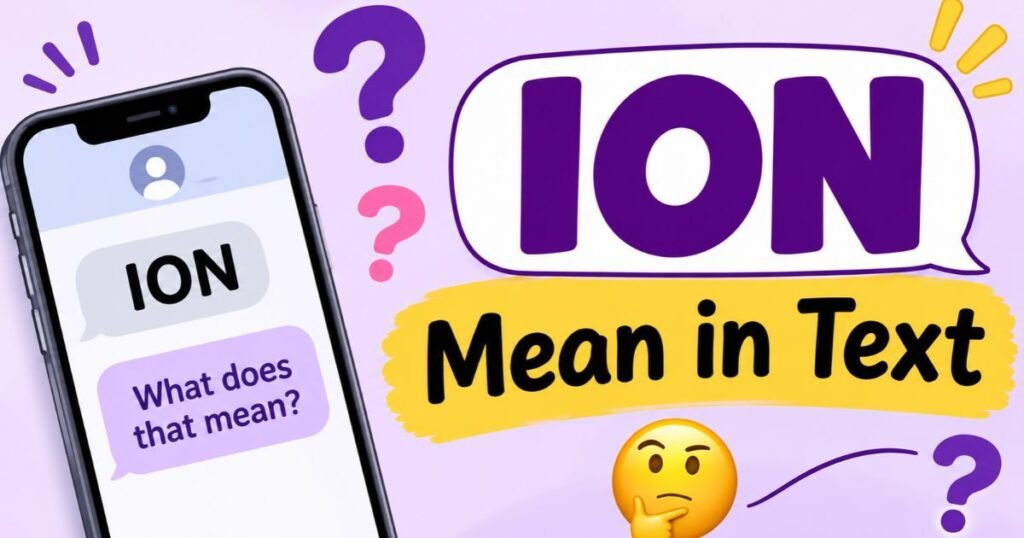
You are scrolling through your messages and see “ion care.” Or maybe a friend writes “ion even know.” It looks like a typo, or maybe a science term. It is neither. ION is a casual way of typing “I don’t.” This guide explains what it means, where it came from, and how to use it without sounding awkward.
What Does ION Mean in Text? – Quick Meaning
In texting, ION means “I don’t.” It is a short, sound-based spelling. When people say “I don’t” fast, it sounds like “ion.” So they type it that way.
You will almost always see it before another word. Here are some common examples:
- Ion now means “I don’t know.”
- Ion care means “I don’t care.”
- Ion think so means “I don’t think so.”
- Ion means “I don’t want to.”
The tone is relaxed and a little playful. It fits chats with friends, comments, and captions. It does not fit a work email or a school essay.
Ion Meaning Slang TikTok
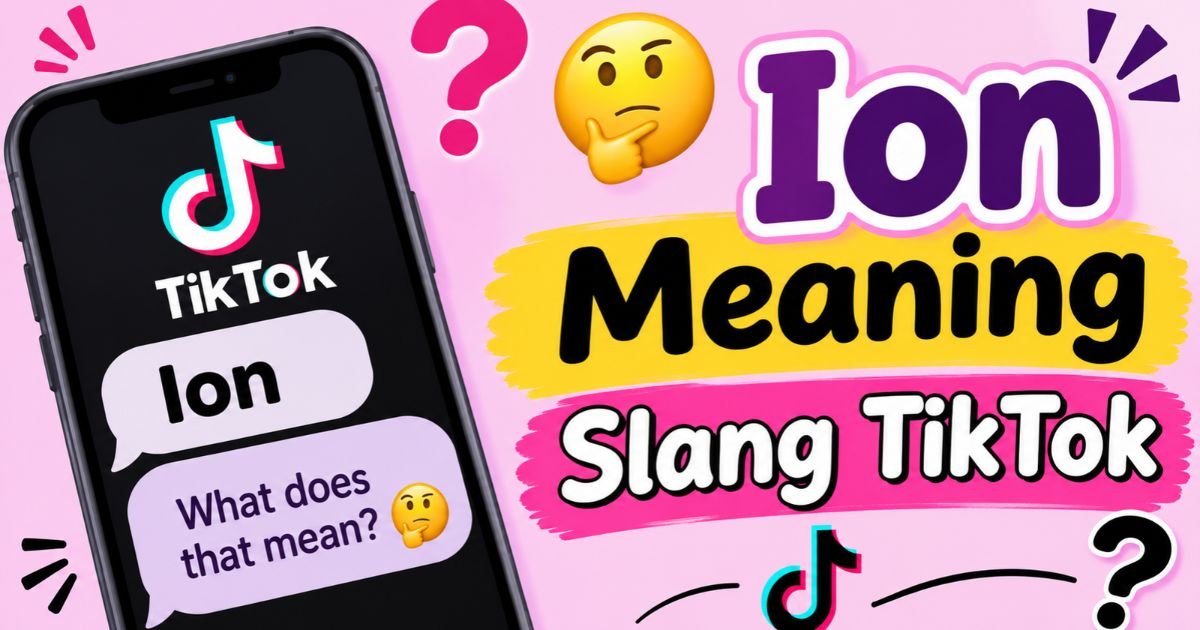
On TikTok, ION shows up in comments, captions, and text overlays on videos. Creators use it to sound casual and real. A caption like “ion even likes pasta but this looks good” feels like someone talking to a friend.
It also appears in trending sounds and skits. The short spelling matches the fast, spoken style of the platform. If a comment says “ion trust him,” the writer means “I don’t trust him.”
What Does Ion Mean Snapchat
Snapchat is built for quick, informal chats, so ION fits right in. People use it in snaps, captions, and replies. A friend might send “ion wanna go out tonight” over a photo of their couch.
The meaning stays the same as everywhere else. It is just “I don’t.” Because snaps vanish fast, people type in the shortest way they can. ION saves a few letters and sounds natural.
Ion Meaning in WhatsApp
On WhatsApp, ION is common in group chats and casual one-on-one talks. It works best with friends and peers. Older relatives or coworkers may not know it.
If someone writes “ion remember that,” they mean “I don’t remember that.” If you are unsure, check the tone of the chat. A friendly, jokey chat is a safe place for slang. A formal group is not.
Ion Meaning Gen Z
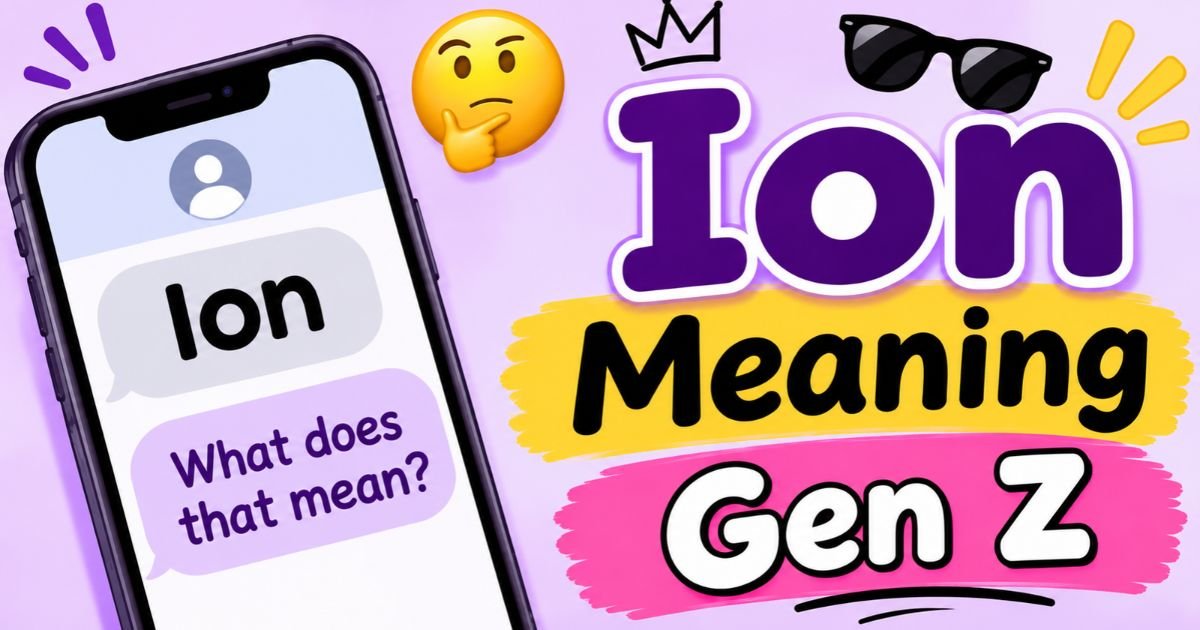
Gen Z uses ION as part of everyday online talk. It blends with other short forms like “fr,” “ngl,” and “idk.” Many young people type the way they speak, and ION is a good example of that habit.
For Gen Z, ION is not a secret code. It is just a quick, relaxed spelling. Some people use it all the time. Others save it for jokes or emphasis.
Origin and Background of ION Slang
ION did not come from a single event or a single person. It grew out of how people speak. In many casual English accents, “I don’t” is said as one quick sound. Typing “ion” copies that sound.
The style has strong roots in African American Vernacular English, often shortened to AAVE. Many online slang terms spread from Black communities first. They then moved to wider internet culture through Twitter, Vine, Instagram, and TikTok.
Early on, people used spellings like “i dont” and “idk.” Then phonetic forms such as “ion” and “iono” began to appear. They felt faster and more personal. Over time, ION became a regular part of texting for many people.
Here is a simple timeline of how this kind of slang spreads:
| Stage | What Happens |
| Spoken use | People say “I don’t” quickly in daily talk |
| Early typing | Users spell it the way it sounds |
| Social media | Twitter and TikTok spread it widely |
| Mainstream | More people recognize and use it |
Real-Life Conversations Using ION
Examples make slang easier to learn. Here are a few short chats that show how ION works in real use.
Chat 1: Making plans
- Friend: Wanna get pizza tonight?
- You: ion really feels like pizza. Tacos?
- Friend: Tacos work.
Chat 2: Sharing an opinion
- Friend: Did you like the movie?
- You: ion think it was that good tbh.
- Friend: Same, the ending was weak.
Chat 3: Being unsure
- Friend: What time does the game start?
- You: ion know. Let me check.
Notice the pattern. ION sits at the start of a short, casual sentence. It is almost always followed by a verb like “know,” “care,” “think,” or “want.”
The Emotional and Psychological Meaning Behind ION
ION is more than a shortcut. It carries a mood. The tone can change depending on the words around it and the way the person writes.
Often, ION sounds relaxed and honest. “Ion know” can show real uncertainty. It can also sound like a shrug. The writer is not stressed. They are just being casual.
Sometimes ION adds attitude. “Ion care” can sound blunt or even cold, depending on context. With a laughing emoji, it feels like a joke. With no emoji and a short reply, it may feel dismissive.
ION can also show comfort. People use slang with those they trust. If someone types “ion” with you, they likely feel at ease. It signals a friendly, low-pressure bond.
Common feelings that ION can carry:
- Uncertainty (“ion know what to say”)
- Playfulness (“ion do mornings”)
- Mild annoyance (“ion wanna hear it”)
- Honesty (“ion like him much”)
How Is ION Used in Different Contexts?
The right way to use ION depends on where you are and who you are talking to. The same words can feel perfect in one place and odd in another.
| Context | Is ION Okay? | Why |
| Texting friends | Yes | Casual and expected |
| Social media comments | Yes | Matches the platform style |
| Group chats with peers | Yes | Friendly and relaxed |
| Work emails | No | Too informal |
| School assignments | No | Not standard writing |
| Messages to older relatives | Maybe | They may not understand it |
A good rule is simple. If you would say “I don’t” in a casual voice, ION is fine. If you would use full, careful language, skip it.
Also think about your reader. If someone may not know the slang, write “I don’t” instead. Clear communication always matters more than looking trendy.
Common Misunderstandings About ION
Many people get confused the first time they see ION. That is normal. Here are the most common mix-ups.
It is not a typo. Some readers think the writer forgot the apostrophe or typed the wrong word. In fact, it is a deliberate spelling.
It is not the science term. In chemistry, an ion is an atom with an electric charge. That has nothing to do with texting. Context makes the difference clear. “Ion care” in a chat is never about atoms.
It is not always rude. “Ion care” can sound harsh, but many people use it jokingly. Look at the full message and tone before you decide.
It does not mean “I own” or “I own.” Some people guess these meanings. Neither is correct in normal use.
It is not limited to one platform. It appears on TikTok, Snapchat, WhatsApp, Instagram, and in plain text messages.
Also Read This : HW Meaning in Text
ION Compared With Similar Slang Terms
ION sits in a family of short forms. Each one works a little differently. This table shows the main ones side by side.
| Term | Full Meaning | Tone |
| ION | I don’t | Casual, spoken feel |
| IDK | I don’t know | Neutral, very common |
| IDC | I don’t care | Can sound blunt |
| IONO | I don’t know | Casual, spoken feel |
| IDGAF | A strong, rude form of “I don’t care” | Rude or intense |
| NGL | Not gonna lie | Honest, casual |
The key difference is flexibility. IDK only means “I don’t know.” ION can stand in for “I don’t” before many words. That makes it more versatile in everyday talk.
ION also feels more like speech. IDK is an initialism, so it looks more like a code. ION looks like a word, so it reads like someone talking.
Variations and Related Forms of ION
People play with ION in many ways. You may see these versions online.
- Iono: “I don’t know.” Example: “iono, maybe later.”
- Ion kno: Another way to write “I don’t know.”
- Ionno: Same meaning, slightly longer spelling.
- Ion even: Used to show surprise or disinterest. “Ion don’t even care anymore.”
- Ion think: A soft way to disagree. “Ion think that’s right.”
- Ion wanna: “I don’t want to.” Example: “ion wanna go.”
- Ion really: Adds a gentle tone. “Ion really likes spicy food.”
Capital letters do not change the meaning. Some people write “ION” in caps for emphasis. Others type “ion” in lowercase to keep things relaxed. Both are understood the same way.
How to Respond When Someone Uses ION
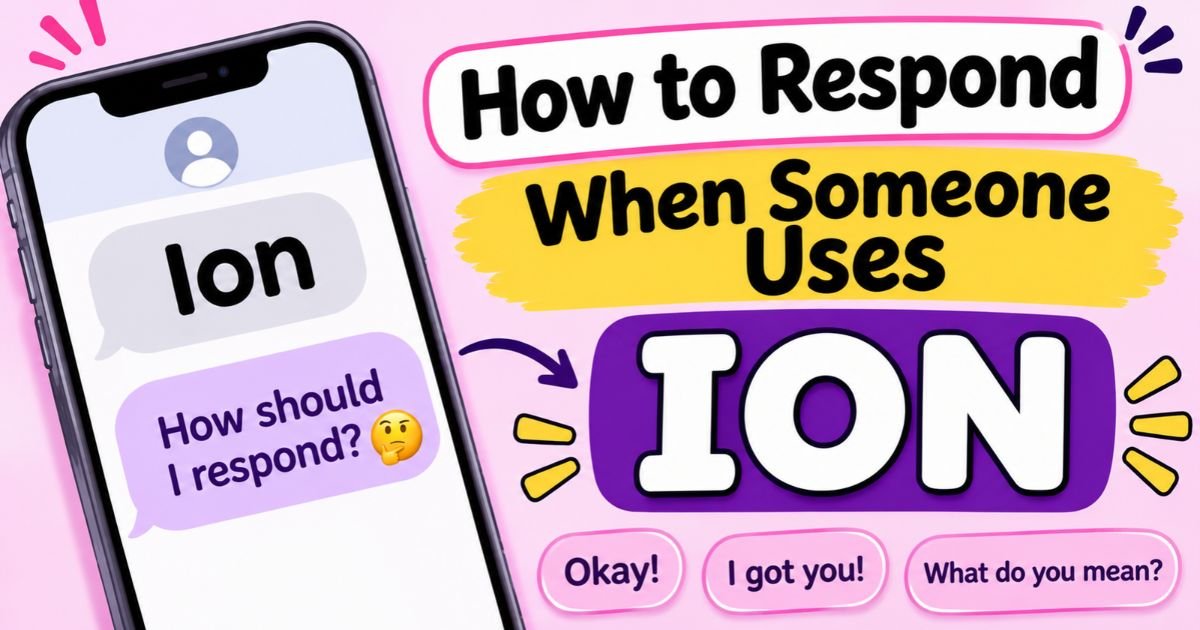
Your reply depends on what they said. Focus on the message, not the slang. ION is just a casual way to say “I don’t.”
If someone writes “ion now,” they may need help. You can offer an idea or a choice.
- “No worries. Want me to pick?”
- “That’s fine. We can decide later.”
If someone writes “ion care,” it matches their mood. If it sounds playful, joke back. If it sounds upset, ask gently.
- “Okay, what’s going on?”
- “Haha fair enough.”
If you do not understand the slang, just ask. A quick “wait, what does ion mean?” is perfectly fine. Most people are happy to explain.
You can also use ION yourself if it feels natural. Keep it light and use it with people you know well. Do not force it. Slang works best when it sounds like you.
Regional and Cultural Usage
ION is used across many English-speaking places, but not equally. It is most common in the United States, where its roots in AAVE are strongest. Social media then carried it to Canada, the UK, Australia, and other places.
In regions where English is a second language, readers may be less familiar with it. People in places like South Asia may see it mostly through TikTok, Snapchat, and YouTube. They often learn it from online friends or videos.
Culture matters too. The term comes from a specific linguistic tradition. It is good to use it with respect and not as a joke on how others speak. Slang is part of real communities.
Age also plays a role. Teens and young adults use ION the most. Older adults may not know it. That gap is normal and shifts as slang spreads.
Conclusion
ION is a simple piece of slang. It stands for “I don’t” and shows up in casual chats on TikTok, Snapchat, WhatsApp, and beyond. It comes from how people speak, and it fits the fast, friendly style of online talk.
Now you know how to read it, reply to it, and use it. Keep it for relaxed chats and switch to full words in formal settings. When in doubt, clarity wins.

1 thought on “What Does ION Mean in Text? Real Meaning and Examples 2026 ”