If you’ve spotted “WFH” in a text message, a work Slack channel, or an Instagram caption and paused for a second wondering what it actually means, you’re not alone. This three-letter acronym shows up everywhere these days from casual chats between friends to formal company memos and while it looks simple, a lot of people still search for a clear, no-fluff explanation.
This guide breaks down exactly what WFH means, where it came from, how it’s used across different platforms, and why it’s become one of the most common abbreviations in modern digital conversation.
What Does WFH Mean?
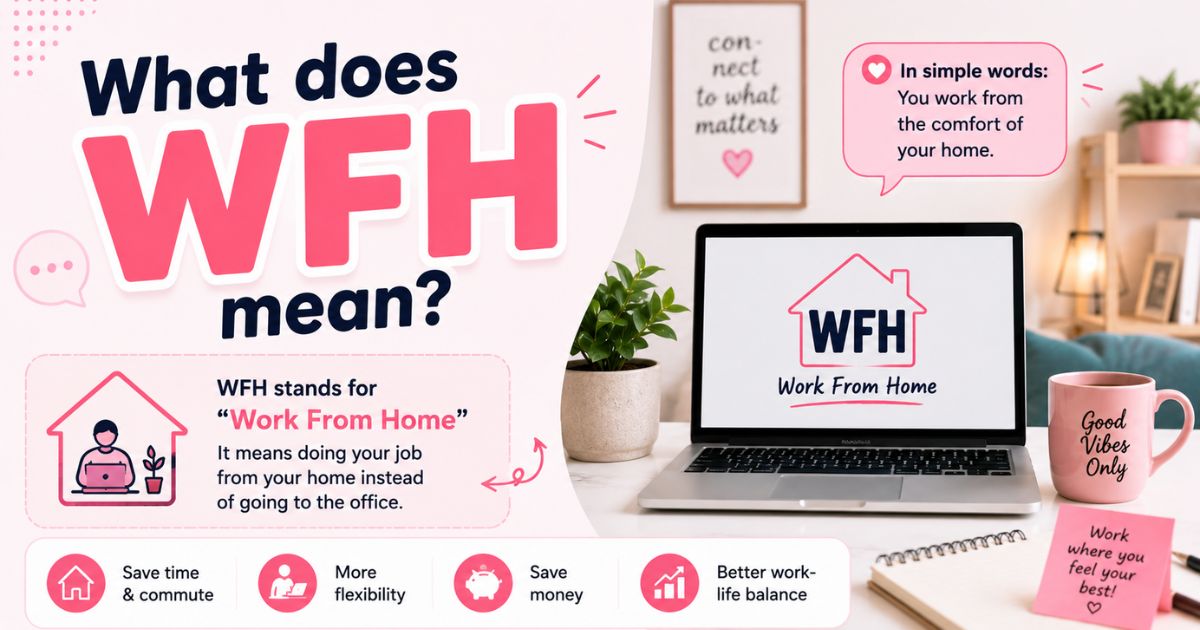
WFH stands for “Work From Home” (sometimes written as “Working From Home”). It’s used to describe a situation where someone is doing their job remotely, from their house or apartment, instead of commuting to a physical office.
At its core, WFH is not a hidden code or a romantic slang term. It’s a straightforward, work-related abbreviation that tells people: “I’m working today, just not from the office.”
You’ll typically see it used in three main ways:
- As a status update “I’m WFH today.”
- As an adjective “It’s a WFH day.”
- As a noun/lifestyle label “I love my WFH setup.”
Because it’s short, quick to type, and instantly understood, WFH has become a go-to abbreviation in texting, workplace chats, and social media captions alike.
Origin and History of “WFH”
The phrase “work from home” has existed for decades, but the acronym WFH really picked up steam alongside the rise of remote work culture and instant messaging.
Here’s a simple timeline of how it evolved:
| Period | How WFH Was Used |
| Early 2000s | Mostly used internally by companies with flexible remote policies |
| 2010s | Became common in workplace emails and internal chat tools like Slack |
| 2020 (COVID-19 pandemic) | Usage exploded globally as millions of employees shifted to remote work overnight |
| 2021–2023 | Became part of everyday texting slang, not just office vocabulary |
| 2024–2026 | Fully normalized across social media, dating apps, and casual conversation |
WFH Meaning Dating
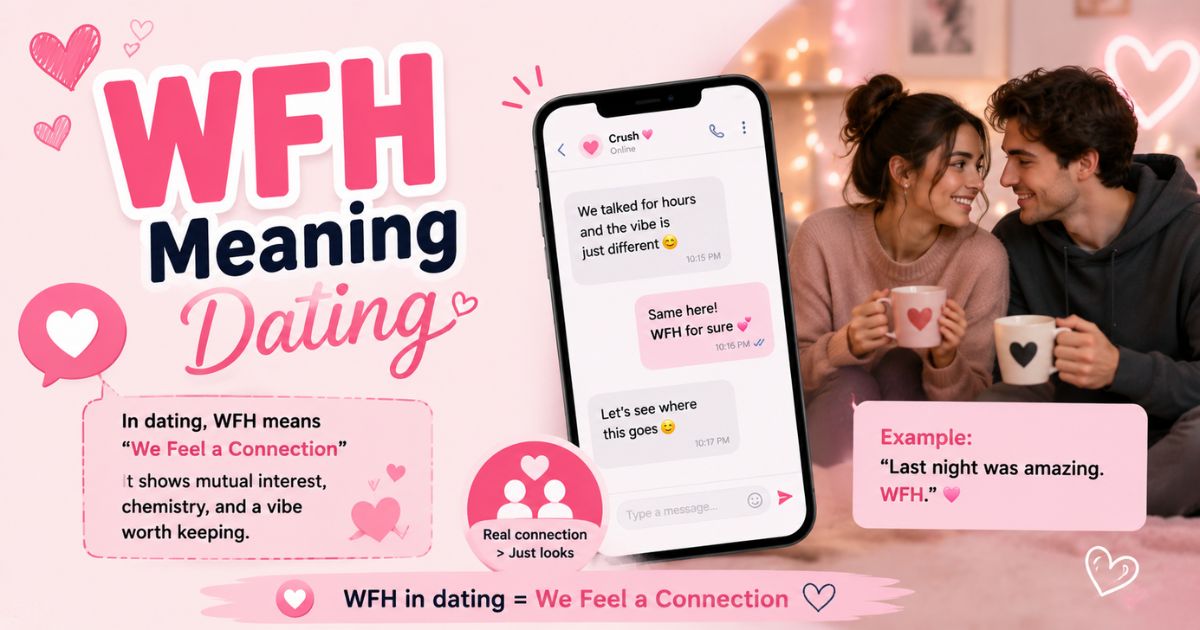
On dating apps, WFH almost always keeps its original meaning. If someone writes “WFH today, free to chat” on a dating profile or in a message, they simply mean they’re working remotely and might have a flexible schedule.
It is not a coded or suggestive term. Some people mistakenly search for hidden meanings behind WFH in dating contexts, but the acronym stays true to its origin: work, not romance. If a match mentions WFH, they’re likely just explaining why they’re online during the day or why their replies might be slower during work hours.
How “WFH” Is Used on Different Platforms
WFH doesn’t mean something different depending on the app but how it’s used and styled can shift slightly from platform to platform.
- Slack/Teams (workplace tools): Used formally, often in status messages like “🏠 WFH” or “WFH back online at 2 PM.”
- WhatsApp: Common in family groups, freelance teams, and friend chats to explain availability.
- Instagram/TikTok: Used more playfully to think “WFH aesthetic desk setup” or self-deprecating captions about pajama-wearing productivity.
- Twitter/X: Often used in jokes, memes, or quick commentary about remote work culture.
- LinkedIn: Used professionally, usually tied to job flexibility, hybrid policies, or hiring posts.
WFH Meaning Urban Dictionary
If you search Urban Dictionary, you’ll find the standard definition “working from home” alongside a few humorous or sarcastic entries. Some joke definitions frame WFH as a way to look busy without doing much work, or poke fun at people who use “working from home” as an excuse to slack off.
These entries are meant as internet humor, not literal alternate meanings. In everyday use, across nearly every platform, WFH still means exactly what it says: working remotely from home.
WFH in Texting vs. Real Life
There’s a small but noticeable difference in how WFH shows up in text messages compared to spoken conversation.
| Context | How It’s Typically Used |
| Texting | Short, quick status update: “WFH today, ping me later” |
| Spoken conversation | Often said as a full phrase: “I’m working from home today” |
| Work chat tools | Used as a status tag or emoji combo |
| Casual conversation | Sometimes used as a light joke about comfy clothes or no commute |
In texting, brevity is the whole point. People use WFH because it’s faster to type than “I’m working from home today,” not because it carries a secret meaning.
Examples of “WFH” in Sentences
Seeing WFH used naturally can make its meaning click faster. Here are some everyday examples:
- “Can’t make it to lunch. I’m WFH and have back-to-back calls.”
- “Our team does WFH Wednesdays every week.”
- “She’s been fully WFH since 2021.”
- “I love my WFH routine: coffee, emails, then a walk.”
- “Sorry for the late reply, I was WFH and lost track of time.”
- “Is Friday a WFH day for you too?”
Notice how WFH can function as a status (“I’m WFH”), a schedule type (“WFH Wednesdays”), or a lifestyle description (“my WFH routine”).
Variations and Related Slang
WFH has inspired a handful of related terms as remote and hybrid work culture has grown. Some common ones include:
- WFA – Work From Anywhere
- WFO – Work From Office
- Hybrid work – A mix of WFH and in-office days
- RTO – Return To Office
- Zoom fatigue – Exhaustion from frequent video calls, often linked to WFH life
- Digital nomad – Someone who works remotely while traveling
WFH Meaning In Job
In job postings and HR language, WFH usually refers to a formal remote work arrangement. You might see phrases like:
- “This is a 100% WFH position.”
- “WFH flexibility available after 90 days.”
- “Hybrid role 3 days WFH, 2 days in-office.”
In this context, WFH is treated as a job benefit or work structure, not casual slang. It signals to candidates whether the role allows remote flexibility, which has become a major factor in job searches since 2020.
Is “WFH” Safe for Kids?
Yes WFH is completely safe and appropriate for kids to see or use. There’s nothing hidden, offensive, or age-restricted about this acronym. It simply describes a work arrangement, and children are likely to pick it up naturally from hearing parents or teachers use it in everyday conversation.
There are no alternate slang meanings in mainstream use that would raise concern. If your child starts using WFH in a sentence, it just means they’ve absorbed common household or workplace vocabulary.
When to Use (and Avoid) “WFH”
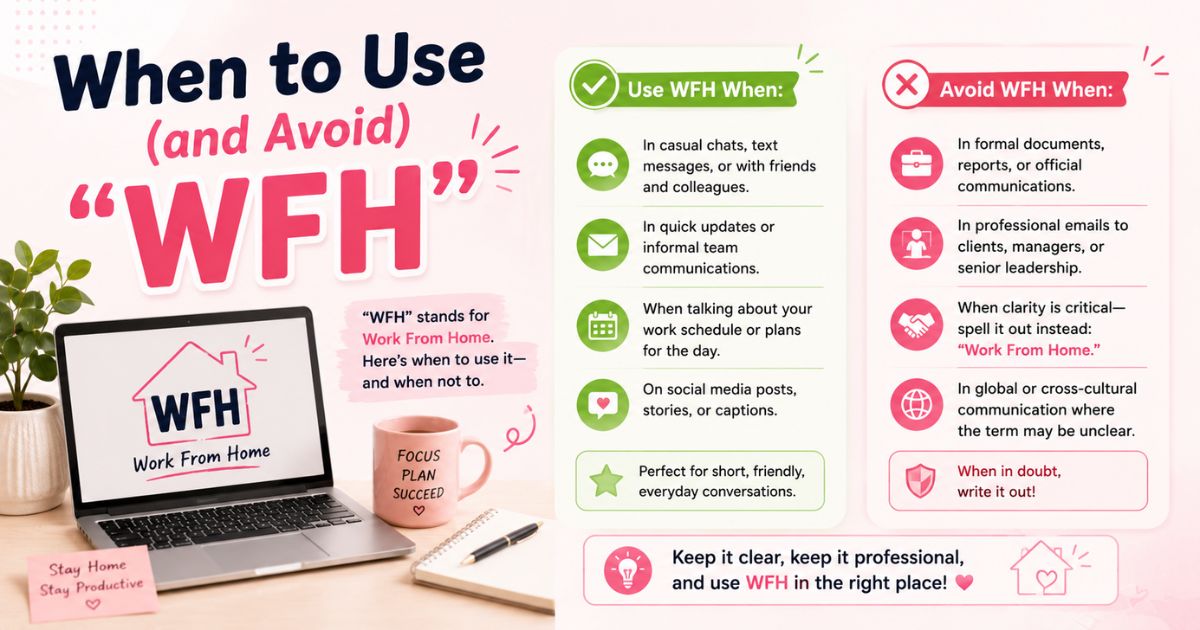
Like most abbreviations, WFH fits some situations better than others.
Good times to use WFH:
- Quick status updates with coworkers or friends
- Casual texts explaining your location or availability
- Social media captions about remote work life
- Job listings or HR communication
Better to avoid WFH:
- Formal written reports or official documents (spell it out instead)
- First-time professional emails to new clients (use “working from home” for clarity)
- Conversations with someone unfamiliar with common abbreviations
When in doubt, spelling out “working from home” once and then switching to WFH afterward keeps things clear and professional.
The Cultural Shift Behind “WFH”
WFH didn’t just stick around as a handy abbreviation, it became a symbol of a much bigger change in how people think about work itself. Before 2020, remote work was mostly seen as a perk offered to a small group of employees, often in tech or freelance roles.
Today, it’s a mainstream expectation that shapes how companies hire, how job seekers evaluate offers, and how entire industries structure their teams.
This shift shows up clearly in how casually WFH gets dropped into conversation now. Nobody stops to explain what it means anymore; it’s simply assumed everyone already knows.
That kind of effortless recognition is usually a sign that a term has moved from niche jargon into permanent, everyday vocabulary similar to how “email” or “Wi-Fi” once needed explaining and now don’t.
Why WFH Became Slang, Not Just an Abbreviation
An abbreviation becomes slang when people start attaching tone, humor, or identity to it and that’s exactly what happened with WFH. It stopped being a neutral HR term and picked up cultural baggage:
- A badge of flexibility for many workers, saying “I’m WFH” signals independence and better work-life balance.
- A source of humor jokes about pajama pants, muted Zoom calls, and “productive procrastination” turned WFH into a running gag online.
- A lifestyle aesthetic of cozy desk setups, coffee shop backdrops, and “WFH essentials” content built an entire content niche around the term.
- A generational marker younger workers entering the job market post-2020 often see WFH or hybrid flexibility as a baseline expectation, not a bonus.
This layered meaning is exactly why WFH feels different from purely technical abbreviations like “ASAP” or “FYI.” Those terms describe an action. WFH describes a whole way of living and working, which is part of why it keeps showing up in memes, captions, and casual banter rather than staying locked inside office emails.
Also Read This Blog : What Does IYKYK Mean?
WFH and the Future of Work Language
As hybrid schedules become the norm rather than the exception, new shorthand keeps branching off from WFH, think “WFH days,” “hybrid split,” or company-specific status tags. Language tends to evolve fastest around things people talk about constantly, and remote work is now a daily topic for a huge share of the global workforce.
That steady, everyday use is exactly why WFH has settled comfortably into slang status. It’s short, it’s universally understood, and it captures something people genuinely experience, not just a formal policy buried in an employee handbook.
Conclusion
WFH is one of those acronyms that looks confusing at first but turns out to be refreshingly simple once explained: it just means “working from home.” Whether you spot it in a text from a friend, a Slack status at work, or a caption on social media, the meaning stays consistent across nearly every context, including texting, dating apps, and job listings.
As remote and hybrid work continue to shape how people live and communicate, WFH has moved from a niche office term into everyday digital slang used by professionals, casual texters, and even kids repeating what they hear at home. Now that you know exactly what it means and how it’s used, you’ll never have to second-guess it again.