Meta title: What Does GPI Mean in Text? 2026 Slang Guide, Examples & Replies Meta description: GPI means “gracias por invitar” (thanks for inviting). Learn how it’s used in texts, Instagram and TikTok, what it really implies, and how to reply. URL slug: /what-does-gpi-mean-in-text
You open a group chat. Your friends just posted a photo from dinner, and someone has commented one word under it: “GPI.”
Is that a thank-you? A complaint? A joke?
It’s a bit of all three, depending on who sends it. This guide explains what GPI means in text, where it comes from, how people use it on different apps, and what to say back. You’ll also find real chat examples, a comparison table and a quick FAQ.
Quick Answer: What Does GPI Mean in Text?
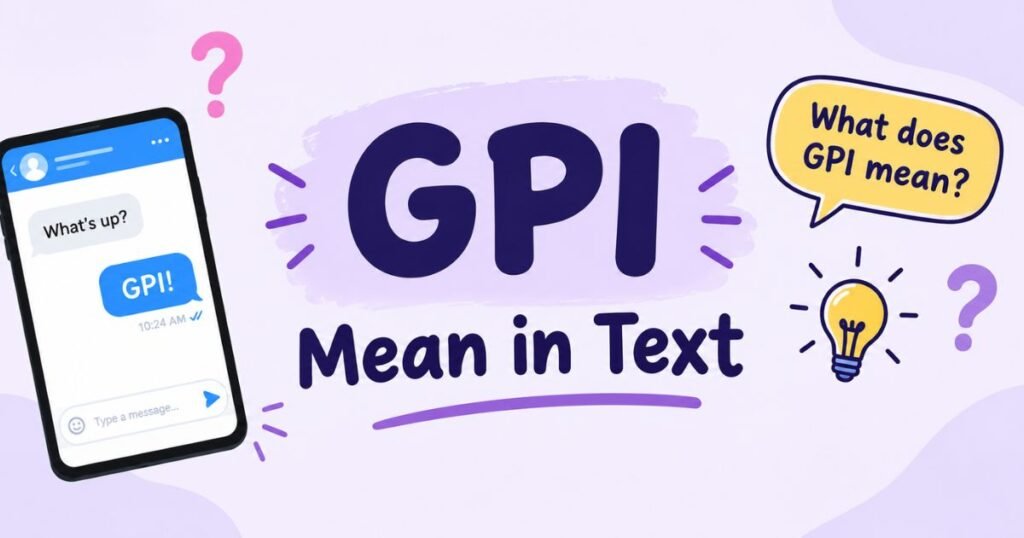
GPI means “gracias por invitar,” which is Spanish for “thanks for inviting.” In most chats, people use it sarcastically. It’s a playful way to say, “I saw you all hang out and I wasn’t invited.”
- Literal meaning: thanks for the invitation
- Real meaning (most of the time): you left me out, and I noticed
- Tone: joking, teasing, sometimes a little hurt
- Where you’ll see it: WhatsApp, Instagram, Facebook, TikTok
What Does GPI Mean in Text?
In texting and social media, GPI is a Spanish-language abbreviation. It started as a simple thank-you and turned into internet shorthand for “you didn’t invite me.”
Spanish-language media across Mexico, Peru, Colombia and Argentina describe the same shift. The phrase can still be a sincere thanks. But online, the sarcastic use has taken over.
Think of it as the Spanish-speaking cousin of a pointed “Wow, must have been nice.”
GPI Meaning in Text Explained
Here’s how the phrase breaks down:
| Letter | Stands for | English |
| G | Gracias | Thanks |
| P | Por | For |
| I | Invitar | Inviting |
So the full phrase is “thanks for inviting.”
The twist is the context. If you were invited and you replied “GPI,” it’s a real thank-you. If you weren’t invited, it’s a joke at the host’s expense.
The same three letters carry two opposite messages. That’s why GPI is so easy to misread.
Is GPI an Acronym, Short Form, or Slang?

It’s all three, depending on how you look at it.
- Acronym: each letter comes from one word of a phrase.
- Short form: it shortens a longer expression to save typing.
- Slang: the sarcastic meaning is informal and lives mainly in chats and comments.
The Royal Spanish Academy (RAE) has said that abbreviations made for chats and short messages belong to that setting. They shouldn’t be carried into formal writing. GPI isn’t a dictionary word. It’s a chat shorthand.
GPI Meaning Across Platforms
The meaning stays the same everywhere, but the style changes a little.
| Platform | How GPI is used | Typical tone |
| Reply to a group photo or a “we’re out” message | Teasing | |
| Comment on a post or reply to a Story | Playful, public | |
| Comment under a friend’s event photo | Light sarcasm | |
| TikTok | Comments and #GPI videos acting out exclusion | Comedic |
| SMS / DMs | One-to-one message after a missed meetup | Casual |
On TikTok, creators have also made short skits around the phrase, showing someone finding out their friends went out without them.
GPI Tone and Context Variations
Same word, different mood. Here are the main versions:
- Joking: “GPI 😂” under a brunch photo. No real hurt.
- Sarcastic: “GPI por avisar” (thanks for letting me know, with an edge). A bit sharper.
- Genuinely grateful: “GPI, la pasé increíble.” You were invited and you’re thanking them.
- Passive-aggressive: a bare “gpi.” with a period and no emoji. This one may signal real annoyance.
Emojis, punctuation and your history with the person tell you which version you’re reading.
Real Chat Examples Using GPI
Example 1: The group photo
Friend A: [posts photo from a café] Friend B: GPI 😅 Friend A: Next time, I promise!
Example 2: Genuine thanks
You: Hope you can make it Saturday, dinner at 8. Friend: GPI! See you there.
Example 3: Playful exclusion
Cousin: Family lunch was amazing today. You: GPI, I see how it is 😂
Example 4: Sharper tone
Coworker: Team lunch was great! You: gpi.
Example 4 reads colder. Without an emoji, the other person may feel the sting.
GPI Grammar and Language Role
GPI works as an interjection or a short reaction, not as a full sentence. It stands alone, usually in lowercase or all caps, and often comes with an emoji.
- It’s often a comment or reply rather than the start of a conversation.
- It can be followed by a reason: “GPI por la invitación al cine.”
- It’s not used in formal emails, school work or business messages.
How to Reply When Someone Says “GPI”
Your reply depends on what you want to do next. Try one of these.
If it’s a joke:
- “Next time you’re coming, deal? 😂”
- “You were next on my list!”
- “Haha, I owe you one.”
If they seem genuinely hurt:
- “Sorry, it was last minute. Let’s plan something properly.”
- “That’s on me. Are you free this weekend?”
If you want to avoid drama:
- A simple emoji like 😅 or 😂
- No reply at all, if the tone is clearly light
Two tips: don’t get defensive, and don’t ignore it if it feels sincere. A short, friendly invitation usually settles it.
Common GPI Questions
What does GPI mean in Instagram?
On Instagram, GPI means “gracias por invitar,” and it’s usually a sarcastic comment when someone sees a post from an event they weren’t invited to.
GPI meaning in English?
In English, it translates to “thanks for inviting,” and it’s often used ironically to mean “you didn’t invite me.”
GPI meaning in education?
In school or academic settings, GPI usually isn’t slang. It can stand for terms such as the Gender Parity Index in education statistics, so check the context before assuming.
Is GPI Rude or Bad?
Not usually. Most people mean it as a joke between friends.
It can feel rude when:
- the sender is actually upset,
- you use it with someone you don’t know well,
- or it’s sent in a serious or professional chat.
Rule of thumb: if you wouldn’t say a sarcastic “thanks for inviting me” out loud to that person, don’t type it either.
Who Uses GPI?
- Spanish speakers across Latin America, especially in Mexico, Peru, Colombia and Argentina
- Teens and young adults who live in group chats
- Bilingual friends mixing English and Spanish
- TikTok creators making relatable “left out” content
Spanish-language outlets note it’s most common among younger users, though older people pick it up through family chats too.
Also Read This : WDYM Mean in Text
Origin and Internet Culture Behind GPI
Chat abbreviations have always grown out of speed and convenience. Spanish speakers already used shortcuts like NTP (“no te preocupes”), TQM (“te quiero mucho”) and NTC (“no te creas”). GPI joined that family.
It began as a plain thank-you for an invitation. Over time, people started using it ironically to point out that they weren’t invited. Social media made it spread fast, especially through Facebook comments, WhatsApp groups and TikTok skits.
One more thing to know: some websites claim GPI secretly referred to parties with drugs or alcohol. That’s only a guess. There’s no solid evidence for it, so treat it as an internet rumor.
GPI Comparison Table
| Term | Meaning | Language | Tone |
| GPI | Gracias por invitar (thanks for inviting) | Spanish | Sarcastic or grateful |
| NTP | No te preocupes (don’t worry) | Spanish | Reassuring |
| TQM | Te quiero mucho (love you lots) | Spanish | Affectionate |
| FOMO | Fear of missing out | English | Anxious, relatable |
| POV | Point of view | English | Neutral, storytelling |
GPI is the closest match to the English feeling of “FOMO,” but it’s said to the people who left you out.
Experience-Based Insight
Here’s a pattern you’ll notice in real chats. The word alone rarely causes trouble. The timing and punctuation do.
A cheerful “GPI 😂” a few minutes after a post is almost always playful. A lowercase “gpi.” sent hours later, with no emoji, often carries real feeling. And when a close friend says it, it usually means “I want to be included next time,” not “I’m angry.”
If you’re ever unsure, respond warmly first. You can always clarify later.
Common Mistakes People Make With GPI
- Assuming it’s always sarcasm. Sometimes it’s a real thank-you.
- Using it with strangers or bosses. The joke may not land.
- Mixing it up with other GPI meanings. In business or education, GPI can mean something else entirely.
- Misreading a cold “gpi.” Check the sender’s usual style first.
- Over-explaining. A long defensive reply makes a small joke feel big.
- Typing it in English-only chats. Many people won’t know what it means.
When Should You Use GPI?
- With close friends who share your sense of humor
- When you honestly want to thank someone for an invitation
- In casual group chats or comment sections
- When you want to tease lightly about a missed hangout
When Should You Avoid GPI?
- In work emails, school messages or formal chats
- With people who might be hurt about actually being left out
- When you’re genuinely upset and want to talk it through (say it directly instead)
- With anyone who doesn’t speak Spanish or follow the slang
How to Know If GPI Is a Joke or Serious
Look for these clues:
| Clue | Likely a joke | Likely serious |
| Emoji | 😂 😅 🙃 | None |
| Punctuation | Open or none | A period: “gpi.” |
| Timing | Right after the post | Hours or days later |
| Relationship | Close friend | Someone who’s been distant |
| Follow-up | “Next time!” | Silence or short replies |
When in doubt, ask: “Wait, are you joking or did that bother you?” It’s direct, kind and usually clears things up fast.
Final Summary
GPI stands for “gracias por invitar,” or “thanks for inviting.” It can be a real thank-you, but online it’s mostly a sarcastic way to say, “I wasn’t invited.”
Read the tone, check the context and answer with humor or warmth. Use it with close friends, skip it in formal settings, and remember that outside of texting, GPI can mean other things entirely, like the Gender Parity Index in education.

1 thought on “What Does GPI Mean in Text? The 2026 Slang Guide & Replies ”