Someone sends you a sweet message. You reply with one word: “Ditto.” That one word says a lot.
Ditto is a short way to say “same here” or “I feel the same.” People use it in texts, chats, comments, and even song titles. This guide explains what it means, where it came from, and how to use it without sounding awkward.
Ditto Meaning in Text – Quick Definition
In text, ditto means “the same” or “me too.” You use it to agree with what someone just said without repeating it.
Say a friend writes, “I’m so tired today.” You can reply, “Ditto.” You just told them you are tired too. It saves time and keeps the chat light.
Here are the most common ways people use it:
- To agree with a feeling (“I miss you” / “Ditto”)
- To match a choice (“I’ll have the pasta” / “Ditto”)
- To return a wish (“Have a great weekend” / “Ditto”)
- To show you share the same view or experience
The word is casual. It works best with friends, family, and partners. In formal emails, most people choose “Likewise” or “The same to you” instead.
Ditto Meaning NewJeans
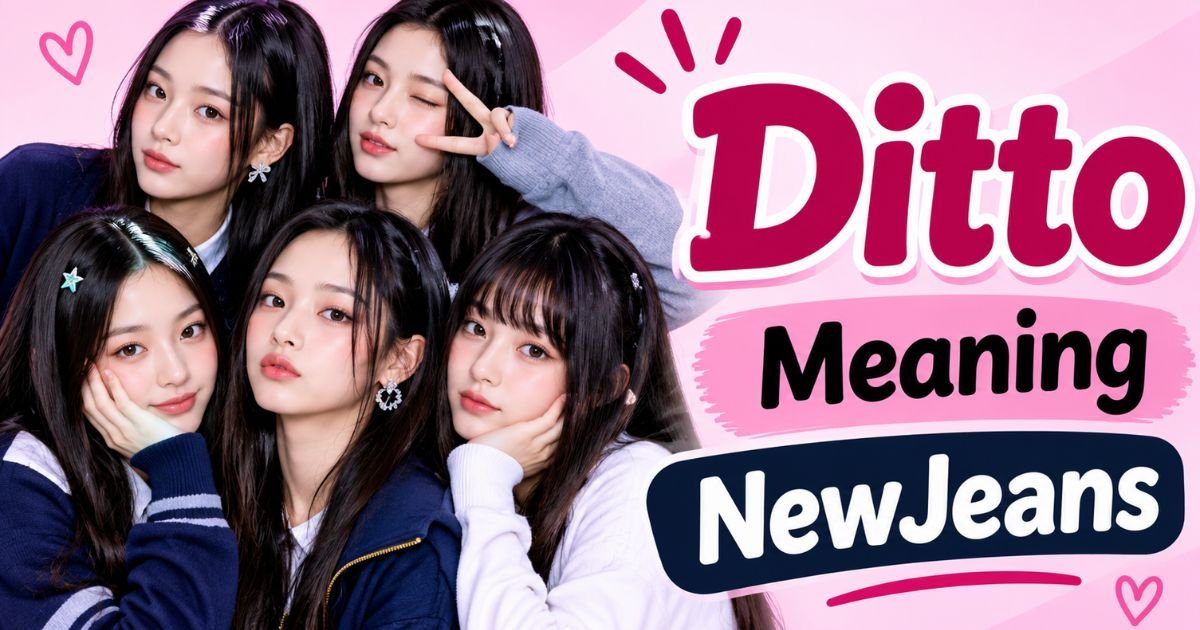
Many younger people now know the word from K-pop. NewJeans, the South Korean girl group, released a song called “Ditto” in December 2022. It became one of their best-known tracks.
In the song, “ditto” carries a soft, emotional meaning. It points to two people sharing the same feeling and the same hidden thoughts. The music video also tells a story about memory, friendship, and nostalgia.
This is why fans often use “ditto” as a gentle, caring reply today. A fan might comment “Ditto” under a post that says “I wish this summer never ended.” It feels warm, a little dreamy, and a bit shy.
If you see the word in a K-pop fan chat, it probably carries that sweet mood. It is less about being quick and more about sharing a feeling.
Ditto Meaning Love
“Ditto” is a popular reply to “I love you.” It means “I love you too” without saying the full phrase.
Some people find this cute. Others find it cold. It depends on the tone, the person, and the moment.
The famous movie Ghost (1990) helped make this idea popular. The character Sam answers “I love you” with “Ditto,” and the scene becomes a pop culture moment. Since then, people have copied that style in real life.
Here is how it can feel in a love chat:
| Message | Reply | What it may mean |
| “I love you” | “Ditto” | I feel the same, said in a playful way |
| “I miss you so much” | “Ditto, a lot” | I miss you too, and I mean it |
| “Goodnight, love” | “Ditto” | Goodnight to you too |
A tip for couples: if your partner wants to hear the full words, say them. A short “Ditto” works well as a daily habit. It works less well in a serious conversation.
Ditto Meaning in English
In standard English, ditto is both a noun and a verb, but most people use it as an interjection or reply.
Dictionaries give a few related meanings:
- As a reply: “The same” or “I agree”
- In lists and tables: A mark that means “same as above”
- As a noun: An exact copy of something
- As a verb (rare): To repeat or copy something
For example: “She wore a red coat. Her sister, ditto.” This means the sister wore a red coat too.
You may also see “ditto” in older-style records and invoices. There, it stands for “the same item as the line above.” This saved writers time and ink.
Origin & Background
The word comes from the Italian word detto. It means “said.” Detto itself comes from the Latin word dictus, which also means “said.”
English speakers began using “ditto” in the 1600s. At first, it showed up in business and bookkeeping. A clerk could write one item and then use “ditto” for every matching line below it.
Later, a symbol joined the word. The ditto mark looks like two small marks or a quote sign (〃). People still use it in handwritten tables and some spreadsheets.
Over time, the word moved from paper into speech. It became a quick way to say “same here.” Then movies, songs, and texting spread it even more.
Here is a simple timeline:
| Period | How “ditto” was used |
| 1600s | Bookkeeping and lists |
| 1800s | Everyday speech, “the same” |
| 1990 | Pop culture boost from the film Ghost |
| 2000s | Texting and online chat |
| 2022 | New wave of interest through NewJeans |
Real-Life Conversations (How People Actually Use “Ditto”)
Seeing real examples makes the word easier to understand. Here are a few short chats.
Friends planning food:
- “I’m getting a coffee. You?”
- “Ditto.”
A family check-in:
- “Safe travels, Mom.”
- “Ditto, take care too.”
A work chat (casual team):
- “Looking forward to the new project.”
- “Ditto! It should be fun.”
A couple texting:
- “Can’t wait to see you tonight.”
- “Ditto 🙂”
You will notice a pattern. “Ditto” always responds to something. It rarely starts a conversation. It works as an echo.
People also pair it with extra words to sound warmer. “Ditto, my friend” or “Ditto, so much” feels kinder than a plain one-word reply.
Also Read This : What Does BPM Mean
Emotional & Psychological Meaning
A short word can carry big feelings. “Ditto” often tells the other person, “You are not alone in this.”
When someone shares a worry, a “Ditto” can create a quick sense of connection. Psychologists call this validation. It means showing someone that their feelings make sense.
But tone changes everything. A warm “Ditto” feels close. A flat “Ditto” can feel lazy or distant.
Think about what the person needs:
- If they share something deep, add more words.
- If they share something light, “Ditto” is perfect.
- If they feel unsure of your love, say the full sentence.
Some people also use “ditto” because it feels safer. Saying “I love you” can feel big. “Ditto” feels smaller and less risky. It lets the speaker share a feeling without a heavy moment.
That is not always bad. It just helps to know why you chose it.
Usage in Different Contexts
The right word depends on who you are talking to. Here is a quick guide.
| Context | Is “ditto” OK? | Better option if unsure |
| Texting friends | Yes | None needed |
| Romantic chat | Yes, if tone is warm | “Me too” or “I love you too” |
| Family messages | Yes | None needed |
| Casual work chat | Sometimes | “Same here” |
| Formal email | Usually no | “Likewise” |
| Social media comments | Yes | None needed |
| Customer service | No | “Thank you, you too” |
On social media, “ditto” is common in comments. People use it to agree with a post or a top comment. It saves space and feels friendly.
In the workplace, keep it for informal teams. If your manager writes “Thanks for your hard work,” a reply of “Ditto” may sound too casual. “Thank you, and the same to you” fits better.
In writing and lists, the ditto mark is mostly old-fashioned now. You may still see it in school worksheets or handwritten price lists.
Common Misunderstandings
Because the word is short, people sometimes read it wrongly. Here are the most common mix-ups.
1. “Ditto” does not mean “copy and paste.” In text, it means you share the feeling. It does not mean you are repeating the message word for word.
2. It is not always rude. Some people think “Ditto” to “I love you” is cold. It can be, but many couples use it as a sweet habit.
3. It is not the same as “Dido.” Dido is a name. Ditto is the word we are talking about. Spelling errors happen a lot.
4. It does not always mean agreement with everything. If someone writes a long message, “Ditto” only matches the main feeling. Be clear about what you mean.
5. It is not only for love. People use it for food, plans, jokes, and wishes too.
If you are unsure how it will land, add a few extra words. A small change makes the message clearer and kinder.
Comparison Table
Many phrases look like “ditto.” They are close, but each has a slightly different feel.
| Phrase | Meaning | Tone | Best used with |
| Ditto | Same here | Casual, short | Friends, partners |
| Me too | I feel or do the same | Friendly, simple | Almost anyone |
| Same | Matches what you said | Very casual | Close friends |
| Likewise | The same to you | Polite, a bit formal | Work, strangers |
| Same here | I agree or share it | Neutral | Everyday chats |
| Right back at you | I return your wish | Warm, playful | Friends, colleagues |
| Back at ya | I return your message | Very informal | Close friends |
If you want to sound relaxed, pick “ditto” or “same.” If you want to sound polite, choose “likewise.”
Variations / Types of “Ditto” (Modern Usage)
People like to play with words online. “Ditto” now comes in many styles.
- “Ditto!” with an exclamation mark shows excitement.
- “Ditto…” with dots can sound unsure or thoughtful.
- “DITTO” in capital letters shows strong feelings.
- “Dittoooo” with extra letters sounds cute and playful.
- “Ditto 💕” with an emoji adds warmth.
- “Ditto to that” is a clear and friendly version.
- “Same, ditto” doubles up for fun emphasis.
- “Ditto, ditto” feels affectionate and teasing.
On platforms like TikTok and Instagram, short replies spread fast. Fans of K-pop often add a heart or a sparkle to give the word extra charm.
You can also use “ditto” in a joking way. For example: “Monday morning?” “Ditto. Send coffee.”
How to Respond When Someone Says “Ditto”
Sometimes you get a “Ditto” and wonder what to say next. The best reply depends on the mood.
If it came after “I love you”:
- Smile and reply with a heart or “Love that.”
- Tease lightly: “Ditto? That’s all I get?”
- Or simply say, “I love you more.”
If it came after a joke or plan:
- “Perfect, see you then.”
- “Great minds think alike.”
- “Haha, same brain today.”
If it felt cold or short:
- Ask gently: “Is everything okay?”
- Or share more yourself: “I’d love to hear how you feel.”
Some simple rules help:
- Match the tone you received.
- Do not read too much into one word.
- If you feel unsure, ask in a kind way.
One word rarely tells the whole story. A quick check-in works better than guessing.
Regional & Cultural Usage
“Ditto” is used in many English-speaking countries. In the US, it is very common, partly because of the film Ghost. In the UK, people more often say “likewise” or “same here.” In Australia and New Zealand, casual replies like “same” or “you too” are popular.
In places where English is a second language, such as Pakistan, India, or the Philippines, “ditto” is mostly seen in chats, memes, and social media. Young people often pick it up from movies and music.
Korean pop culture has added a new layer. Thanks to NewJeans, many fans around the world now link “ditto” with shared feelings and gentle nostalgia.
The ditto mark has its own story. In some countries, people still use it in handwritten school tables and old ledgers. In others, it has almost disappeared.
Tone also changes by culture. In some places, a short reply is friendly. In others, it feels too brief. It helps to watch how the people around you talk.
Final Thoughts
“Ditto” is a small word with a long history. It began as a clerk’s shortcut in the 1600s. Today it helps people say “me too” in a quick, friendly way. Pop culture, from Ghost to NewJeans, has kept it alive and fresh.
Use it when the mood is light and the bond is close. Add a few words when the moment feels serious. A little extra care turns a short reply into a warm one.