You’re scrolling, and someone comments, “DM me for details.” Or a friend texts, “Just DM me the link.” Maybe a stranger says they’re “sliding into your DMs.” It looks simple, but the tone changes a lot depending on who says it and where.
This guide explains what DM means in text, how it works on different apps, how to reply, and when it’s smarter to avoid it.
Quick Answer: What Does DM Mean in Text?
DM means “direct message.” It’s a private, one-to-one message sent to a person instead of a public post, comment, or group chat.
- Short form: DM
- Plural: DMs
- Verb form: “DM me,” “I’ll DM you,” “she DM’d me”
- Most common on: Instagram, X (Twitter), TikTok, Facebook, Discord, LinkedIn
DM Explanation
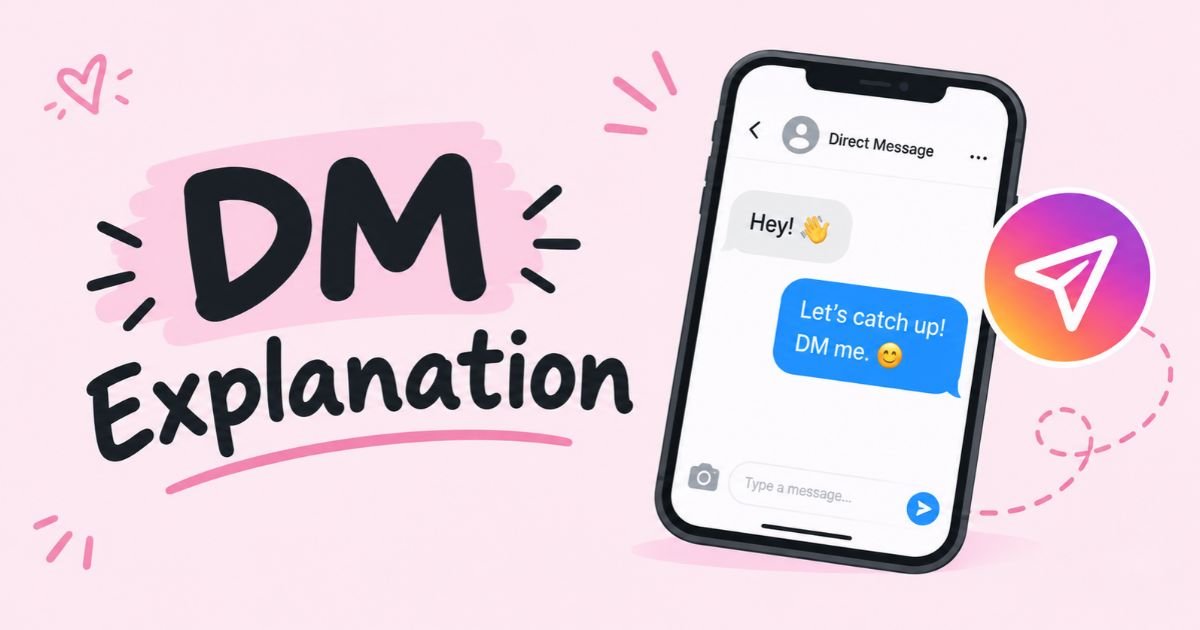
A direct message is a private conversation. Only the sender and the receiver can read it. Public replies and comments are visible to everyone, but a DM stays between the people involved.
People say “DM me” when they want to:
- Share personal details like an email, address, or phone number
- Keep a deal or price off the public thread
- Move a chat out of the comments
- Avoid awkward or sensitive talk in front of others
What Does DM Mean in Chat?
In chat, the DM simply points to a private route. If someone says, “I’ll DM you,” they will message you one-on-one. If they say, “Check your DMs,” they’ve already sent something to your inbox.
It’s also used as a quiet signal. “DM me” can mean “let’s talk privately,” and that privacy is the whole point.
Is DM an Acronym, Short Form, or Slang?
DM is all three, depending on how you look at it.
| Label | Does the DM fit? | Why |
| Acronym | Yes | Built from the first letters of “Direct Message” |
| Initialism | Yes | Each letter is said aloud: “dee-em” |
| Short form | Yes | A quick way to type a longer phrase |
| Slang | Partly | Phrases like “slide into the DMs” are pure slang |
So the term itself is a standard abbreviation, while the phrases around it are informal internet slang.
DM Meaning Across Platforms
The word is the same everywhere. The experience is not.
| Platform | What a DM looks like | Who can usually message you |
| Inbox with message requests | Anyone, but strangers land in Requests | |
| X (Twitter) | Private message inbox | Depends on your privacy settings |
| Messenger chats | Friends, plus filtered requests | |
| Personal chat | Anyone with your number | |
| TikTok | Inbox messages | Limited by age and privacy settings |
| Discord | Direct message tab | Server members, if allowed |
| Messaging inbox | Connections, or InMail |
DM Tone and Context Variations
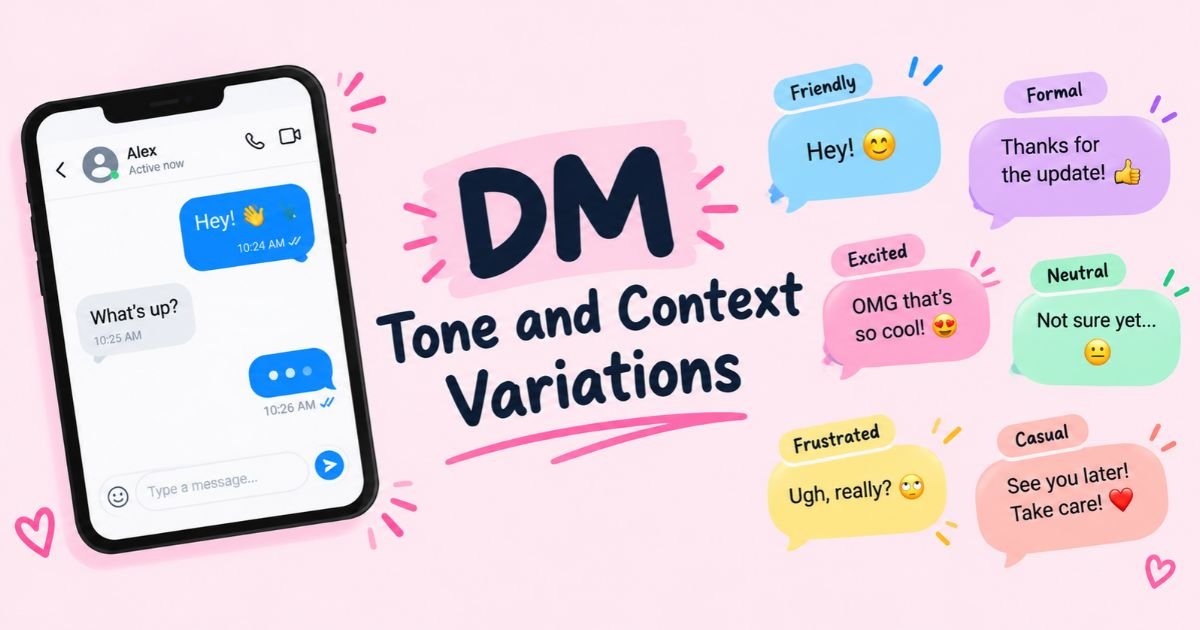
The same two letters can sound friendly, businesslike, or flirty.
- Friendly: “DM me your address and I’ll send the gift.”
- Professional: “Interested? DM us for pricing.”
- Flirty: “He slid into my DMs last night.”
- Urgent: “Check your DMs, I need an answer.”
- Casual: “DM me memes.”
Pay attention to the words around it. Context does most of the work.
Real Chat Examples Using DM
Here are everyday ways people use it.
Selling something
“Selling a used bike. DM for price.”
Asking for a link
Sam: Where did you find that jacket? Riya: Send me a DM, I’ll share the link.
Past tense
“He DM’d me about the event yesterday.”
Collab request
“DM for collabs.”
Sliding in
“Not sure if I should slide into her DMs or just comment.”
DM Grammar and Language Role
DM works as both a noun and a verb, which is why it’s so flexible.
- Noun: “I got a DM from my manager.”
- Verb: “Can you DM me later?”
- Past tense: “DM’d” or “DMed”
- Plural noun: “My DMs are full.”
- Adjective use: “a DM conversation”
You can write it in capitals or lowercase. “dm” is fine in casual texting, but “DM” is clearer.
How to Reply When Someone Says “DM”
If someone says “DM me,” the reply depends on the situation. Use these as a starting point:
- Agree: “Sure, send it now.”
- Ask for time: “I’ll DM you in an hour.”
- Confirm done: “Just sent you a message.”
- Decline politely: “I’d rather keep this here, if that’s okay.”
- Unsure about a stranger: “What’s this about?”
If the request comes from someone you don’t know, take a moment first. Check their profile before you share anything personal.
Is DM Rude or Bad?
No. DM is neutral. It’s just a tool for private messaging.
It can feel rude in a few cases:
- Someone DMs you repeatedly after you’ve ignored them
- A stranger sends an unwanted romantic message
- A person asks for private details too soon
- A colleague uses a DM to dodge an open team discussion
The word isn’t the problem. The behavior is.
DM Meaning on WhatsApp
WhatsApp doesn’t use the term “DM” in its own menus. It calls them chats. But people still say it loosely.
On WhatsApp, “DM me” usually means message me one-on-one instead of in the group. For example, “Don’t post your bank details here, DM me.”
DM Meaning in Facebook
On Facebook, a DM is a message sent through Messenger. If someone says “DM me” under a post or Marketplace listing, they want you to open a private chat.
Messages from non-friends may land in a separate requests folder, so check there if you’re waiting on a reply.
DM Meaning on Instagram
Instagram is where DMs are used the most. You’ll find them behind the paper-plane icon.
Key things to know:
- Messages from people you follow go to your main inbox
- Messages from non-followers go to Message Requests
- You can send photos, videos, voice notes, reels, and GIFs
- “Closed DMs” means the person doesn’t accept messages from strangers
- “Open DMs” means they welcome them
Brands also lean on Instagram DMs for support, sales, and giveaways.
DM Meaning in Chat
Outside social media, “DM” shows up in gaming, Discord servers, work apps like Slack, and online communities. In every case it points to a private, one-to-one conversation, even if the app uses a different label for it.
Who Uses DM?
Almost everyone online does.
- Teens and young adults: for everyday chatting and social talk
- Creators and influencers: for collabs and fan messages
- Small businesses: for orders, quotes, and support
- Recruiters and job seekers: for outreach on LinkedIn and X
- Gamers: for Discord and team coordination
- Remote workers: for quick questions that don’t need a meeting
Origin and Internet Culture Behind DM
The term took off when Twitter gave users a private option next to public tweets. Because of the short character limits at the time, “DM” was far easier to type than “direct message.”
It then spread to Instagram, Facebook, TikTok, and almost every other social app. “Slide into the DMs” followed, turning a plain feature into a piece of internet culture, often with a flirty edge.
Older terms like PM (private message) and IM (instant message) still exist, but DM is now the default.
DM Comparison Table
| Term | Meaning | Where it’s used | Tone |
| DM | Direct message | Social media, chat apps | Neutral |
| PM | Private message | Forums, older platforms, gaming | Neutral |
| IM | Instant message | Older chat apps | Casual |
| Text | SMS or phone message | Mobile phones | Casual |
| Slide into DMs | Start a private chat, often flirty | Instagram, X, TikTok | Playful |
| DM (Dungeon Master) | Game organizer | Tabletop RPGs | Gaming |
Experience-Based Insight
In real use, the biggest confusion isn’t what DM means. It’s what the sender expects next.
A few patterns show up again and again:
- When a seller writes “DM for price,” they usually want a short, direct question, not a long introduction.
- When a friend says “DM me,” they often just want a link or a quick answer.
- When a stranger says “check your DMs,” slow down and read the message carefully before you reply.
Short, clear replies tend to work best. People don’t want an essay in a DM. They want an answer.
Common Mistakes People Make With DM
- Assuming DM always means flirting. It rarely does.
- Sharing sensitive details too fast. Verify the person first.
- Ignoring message requests. Real messages can sit there for days.
- Sending long first messages. Keep it short.
- Mixing it up with Dungeon Master or Doc Martens. Context solves this.
- Pushing someone to move to DMs when they’d rather stay public.
- Using DM for sensitive work matters that should be documented elsewhere.
DM vs PM: Are They the Same?
Mostly, yes. Both describe a private message between two people.
| Feature | DM | PM |
| Full form | Direct message | Private message |
| Popular on | Instagram, X, TikTok | Forums, older sites, some games |
| Modern usage | Very common | Less common |
| Meaning | Private, one-to-one | Private, one-to-one |
The only real difference is habit. DM is the modern word, and PM feels a bit older.
When Should You Use DM?
Use a DM when:
- You’re sharing contact details, addresses, or payment info
- You’re asking about a price, order, or booking
- You want to avoid public debate
- You’re giving feedback that could embarrass someone in public
- You’re reaching out to a creator, brand, or recruiter
- You’re following up on something personal
When Should You Avoid DM?
Skip the DM when:
- A public answer would help other people too
- You’re messaging someone who hasn’t replied or has said no
- It’s a serious work decision that needs a written record
- You’re about to send something angry
- The person is a stranger and your message is overly personal
- Someone asks for money, codes, or passwords. Never share those.
How to Tell the Tone Behind DM
Tone is easy to misread in text. Look for these clues:
- Punctuation: “DM me!” feels warm. “DM me.” can feel flat.
- Emojis: a smile or heart lightens the message
- Timing: late-night messages from strangers read differently than daytime ones
- Relationship: a friend’s “DM me” is not the same as a stranger’s
- Specificity: clear requests (“DM me the link”) usually mean business, while vague ones (“DM me 😉”) may be flirty
- Pressure: urgency plus requests for money or codes is a red flag
When in doubt, ask. A quick “what’s this about?” saves a lot of confusion.
Also Read This : XX Mean in Text
Final Summary
DM means direct message, a private one-to-one chat on apps like Instagram, X, Facebook, TikTok, and Discord. It’s neutral by itself. What changes is the context, the relationship, and the tone around it.
Quick recap:
- DM = direct message
- “DM me” = message me privately
- “Slide into DMs” = start a private chat, often flirty
- DM and PM mean nearly the same thing
- Be careful with strangers and sensitive info
Once you know the meaning and the context, replying to “DM me” becomes easy. Keep your messages short, clear, and respectful, and you’ll avoid most of the awkward moments.

1 thought on “What Does DM Mean in Text? Full m2026 Guide + Smart Replies”